Dream11
Social Gameplay
Designing how social behaviour could become part of the fantasy sports experience.
My role
Design Lead
Team
4 Product Designers
1 Researcher
Duration
Dec 18’ – Jul 23’
Context
Dream11 in 2018
India’s largest daily fantasy sports platform.
45M+Registered users
~95%Of India’s fantasy market
CricketThe sport that mattered
IPLWhere the year peaked
Daily fantasy sports - cricket
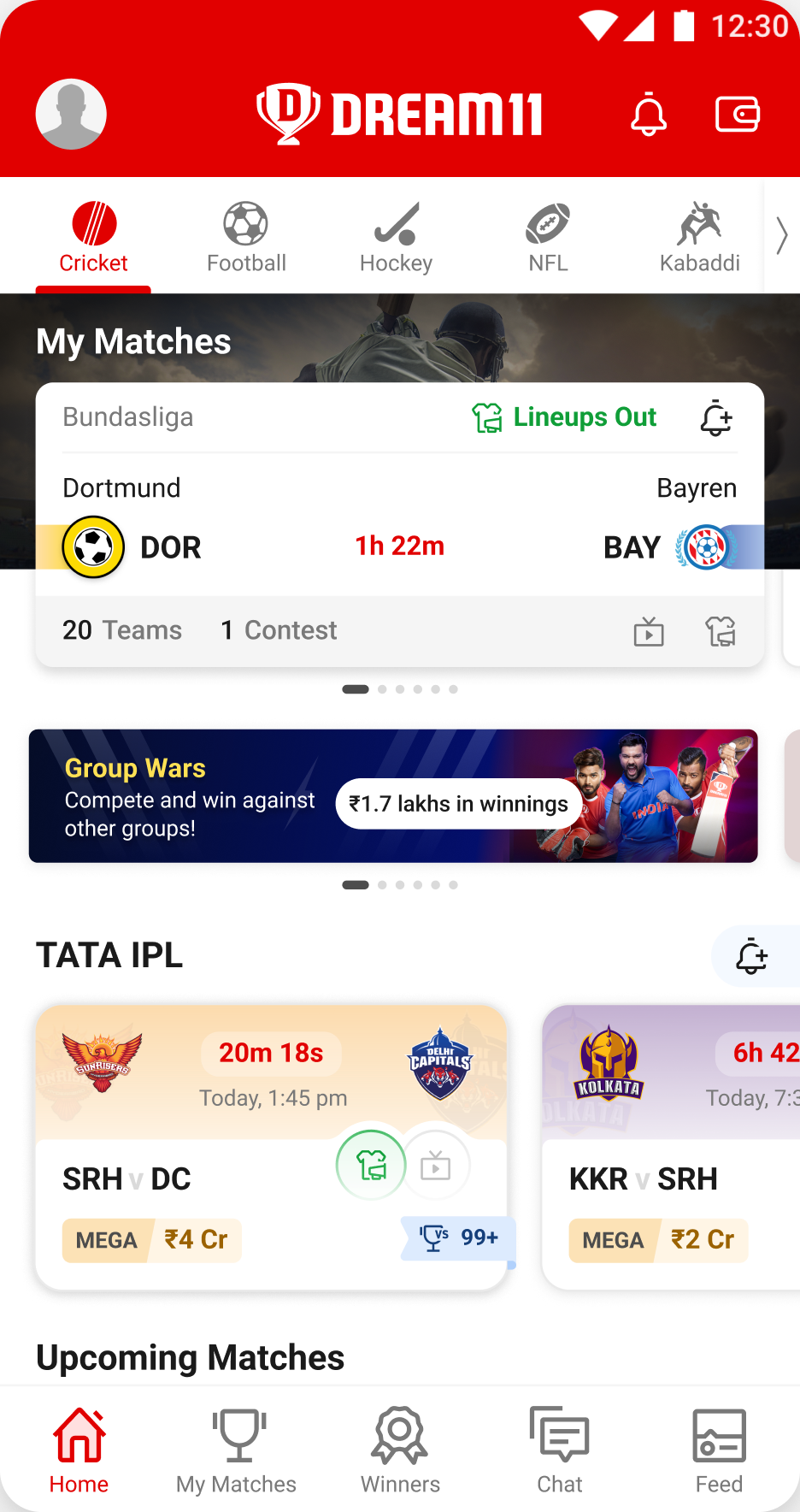
How it works?
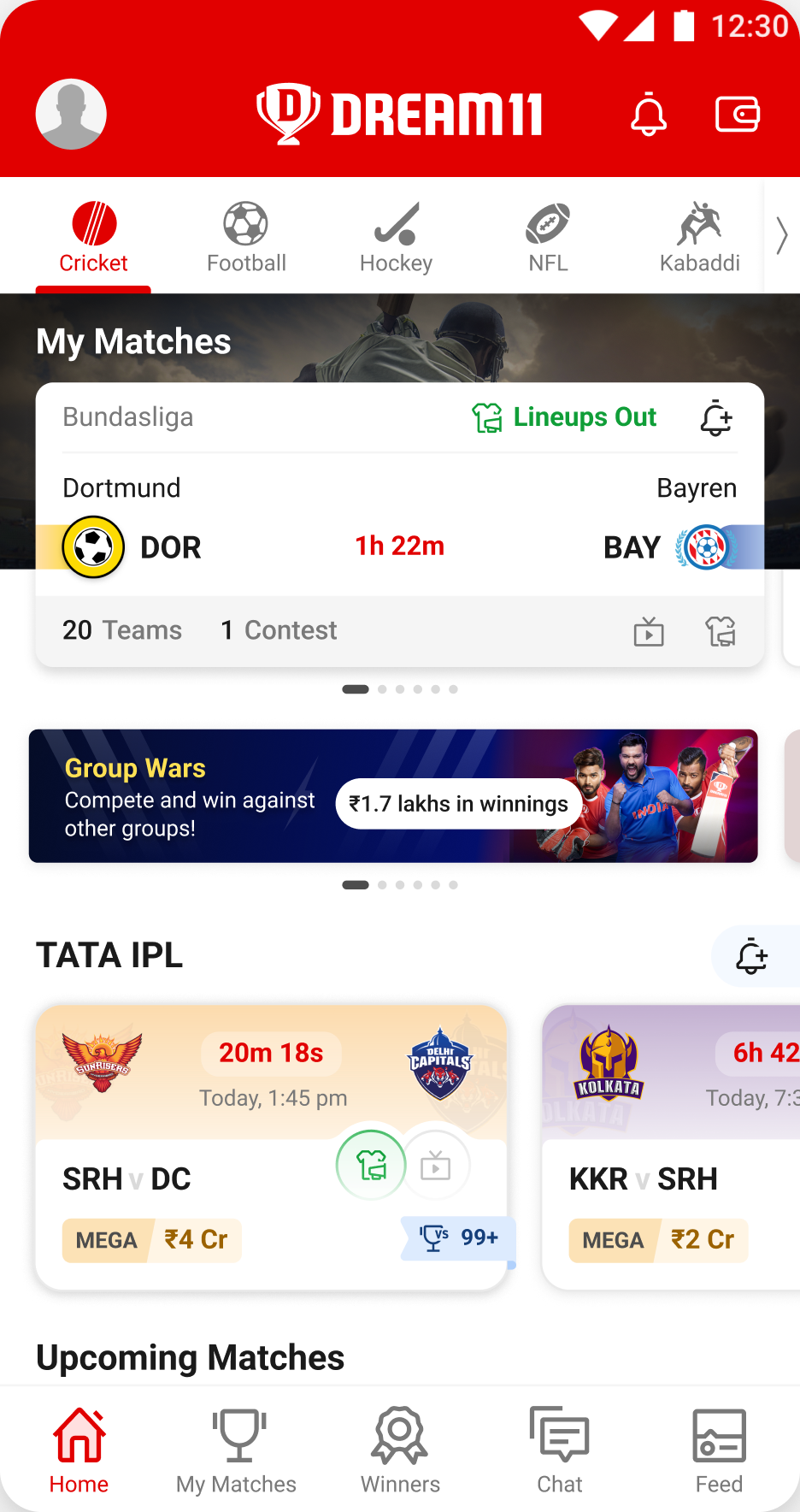
1Select a match.
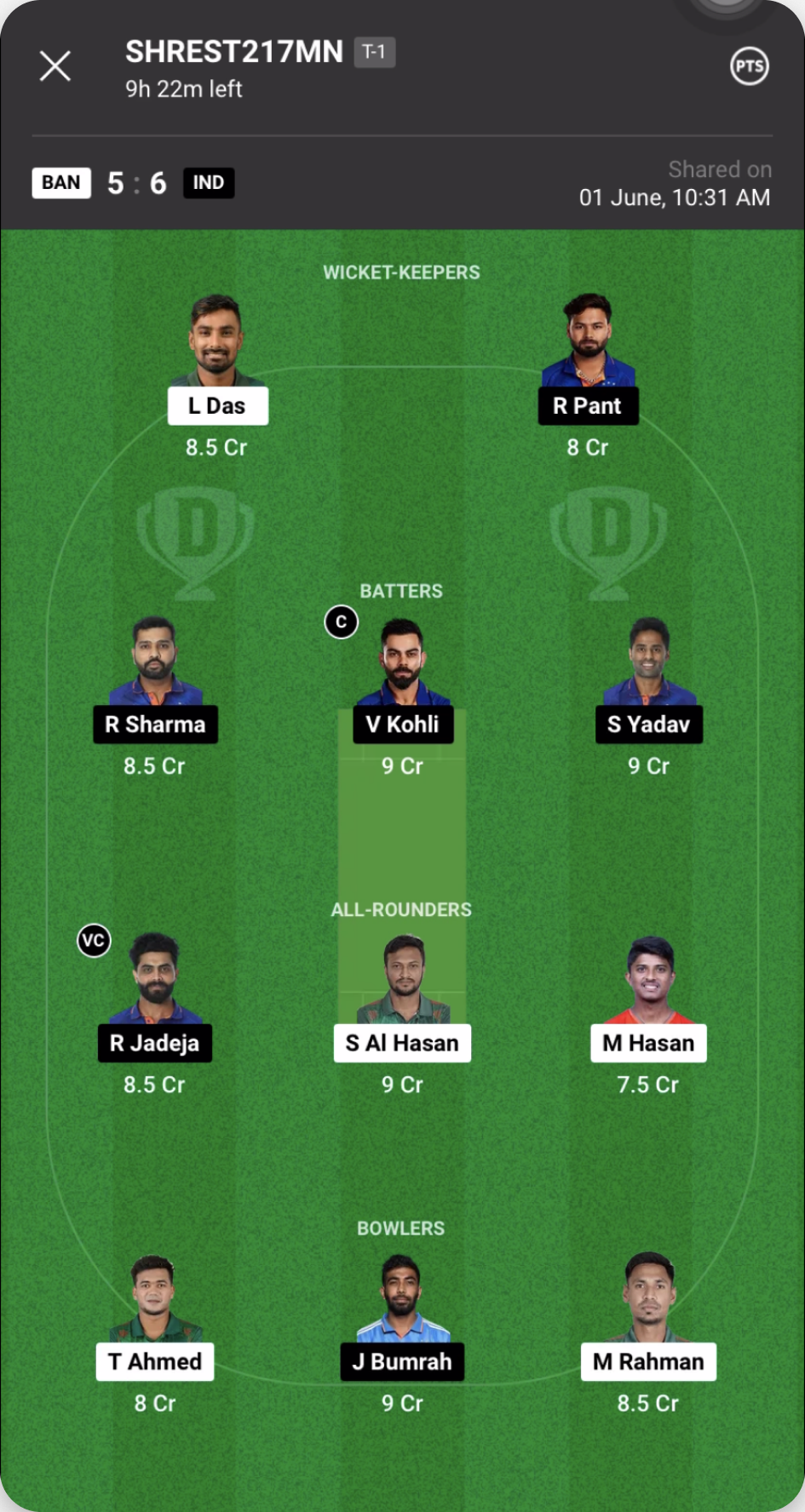
2Pick 11 players from both teams.
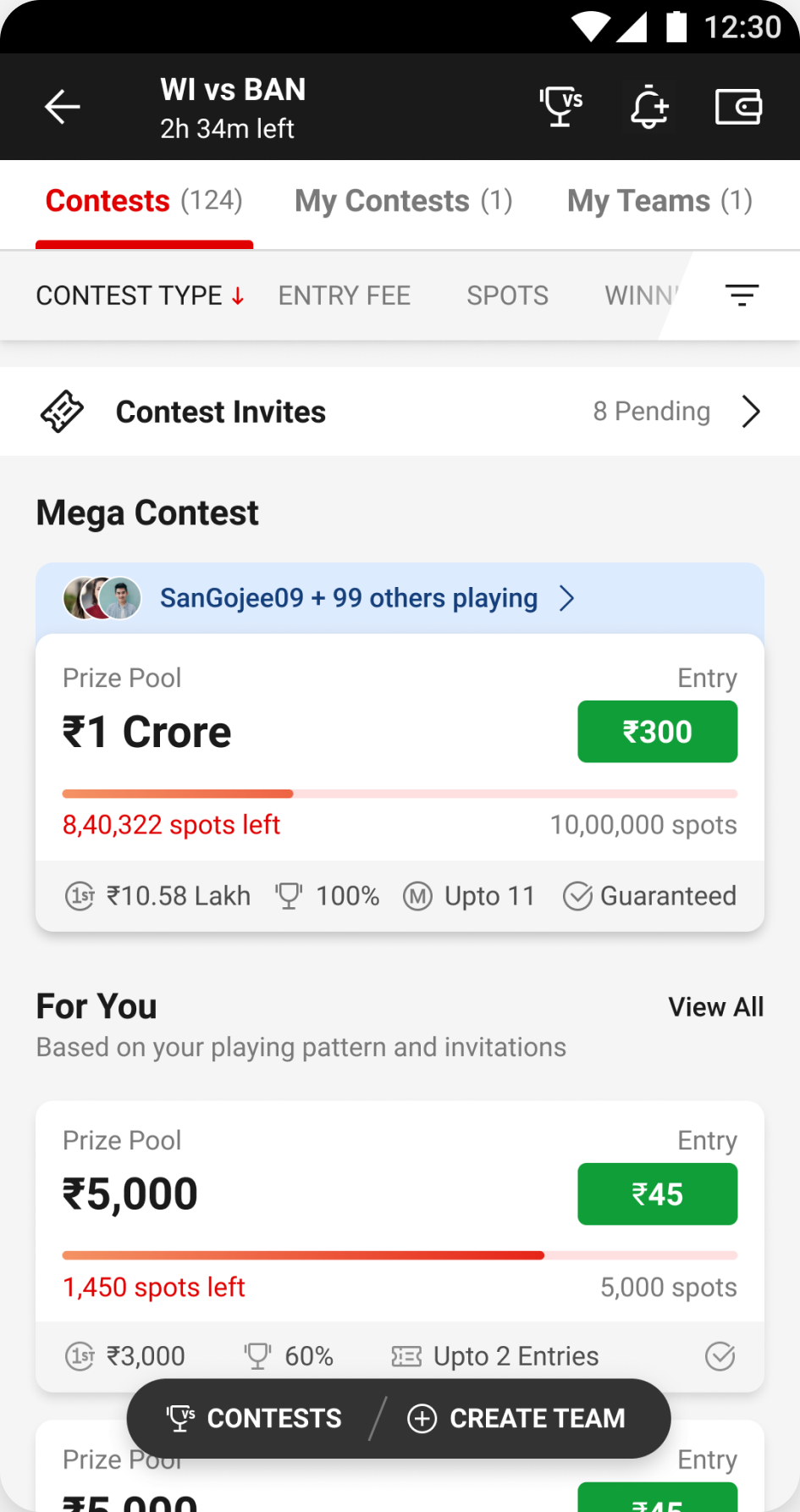
3Join a contest and pay an entry fee.
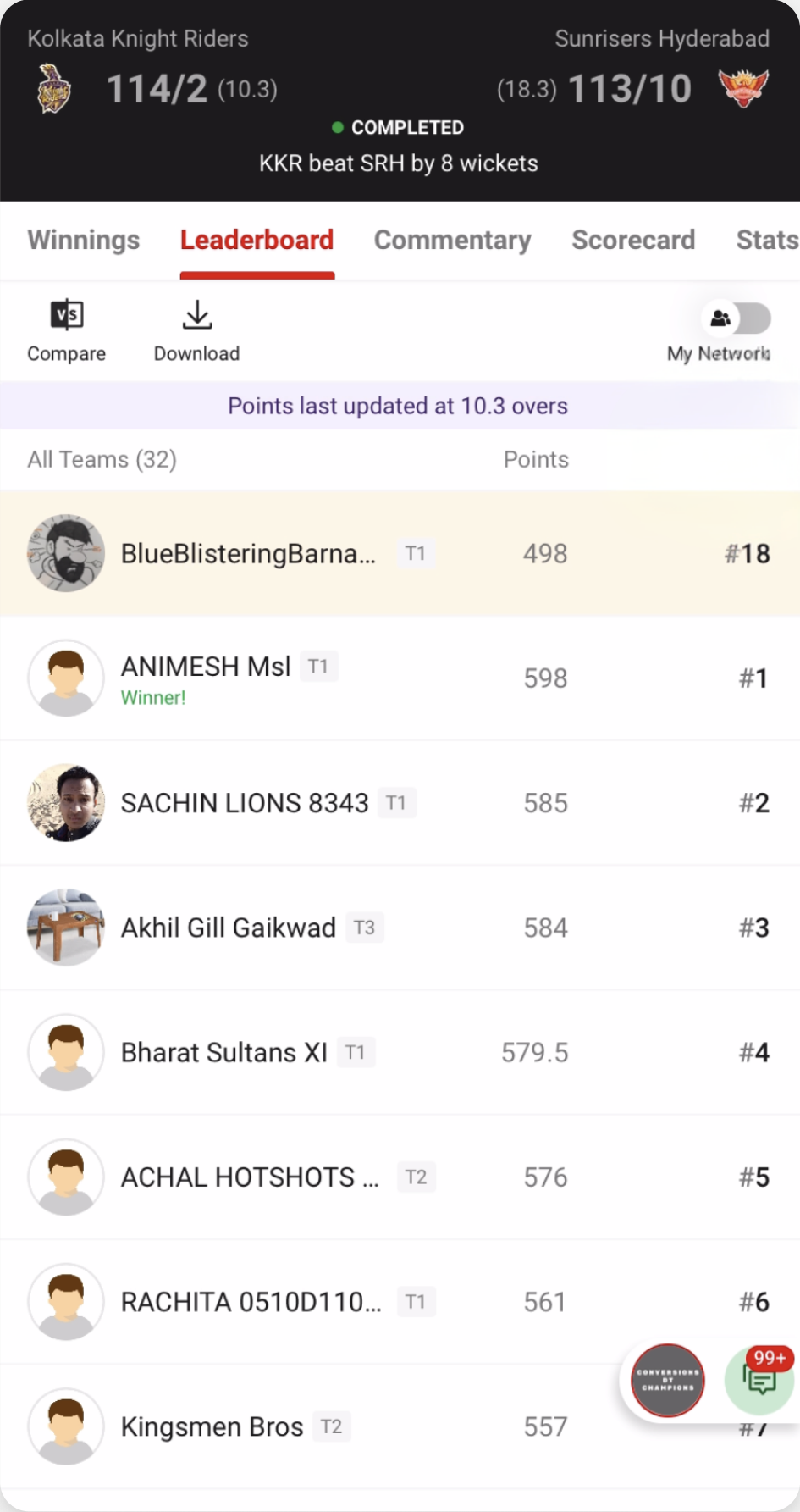
4Player performance determines your rank.
The ask
‘Social’ as Dream11’s competitive moat
The challenge
Competition was growing
New entrants backed by significant funding.
The opportunity
An expanding market
Fantasy sports was growing rapidly across India.
The idea
Build a social layer that would make Dream11 harder to replicate.
The starting advantage
45M+ people
Already played on Dream11.
Use the existing player network as the foundation for social gameplay.
Our approach
Build, test and learn
Why start this way?
A short timeline
Launch the first social experience by IPL 2019.
An established mental model
Users already understood feeds, messaging and social networks.
Existing player behaviour
Build on years of Dream11 usage data and behavioural learning.
Building on 3 key tenets
Create communities
Connect with friends, colleagues and people with shared interests.
Build social equity
Share knowledge, winnings and content to build recognition.
Enhance gameplay and trust
Learn from others, challenge friends and build social proof.
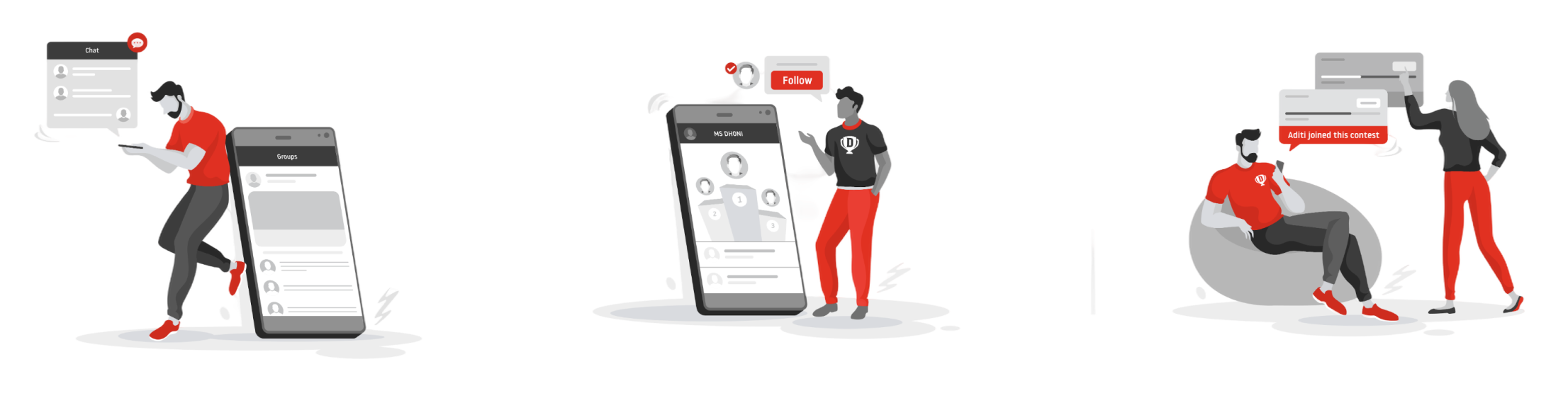
What we built
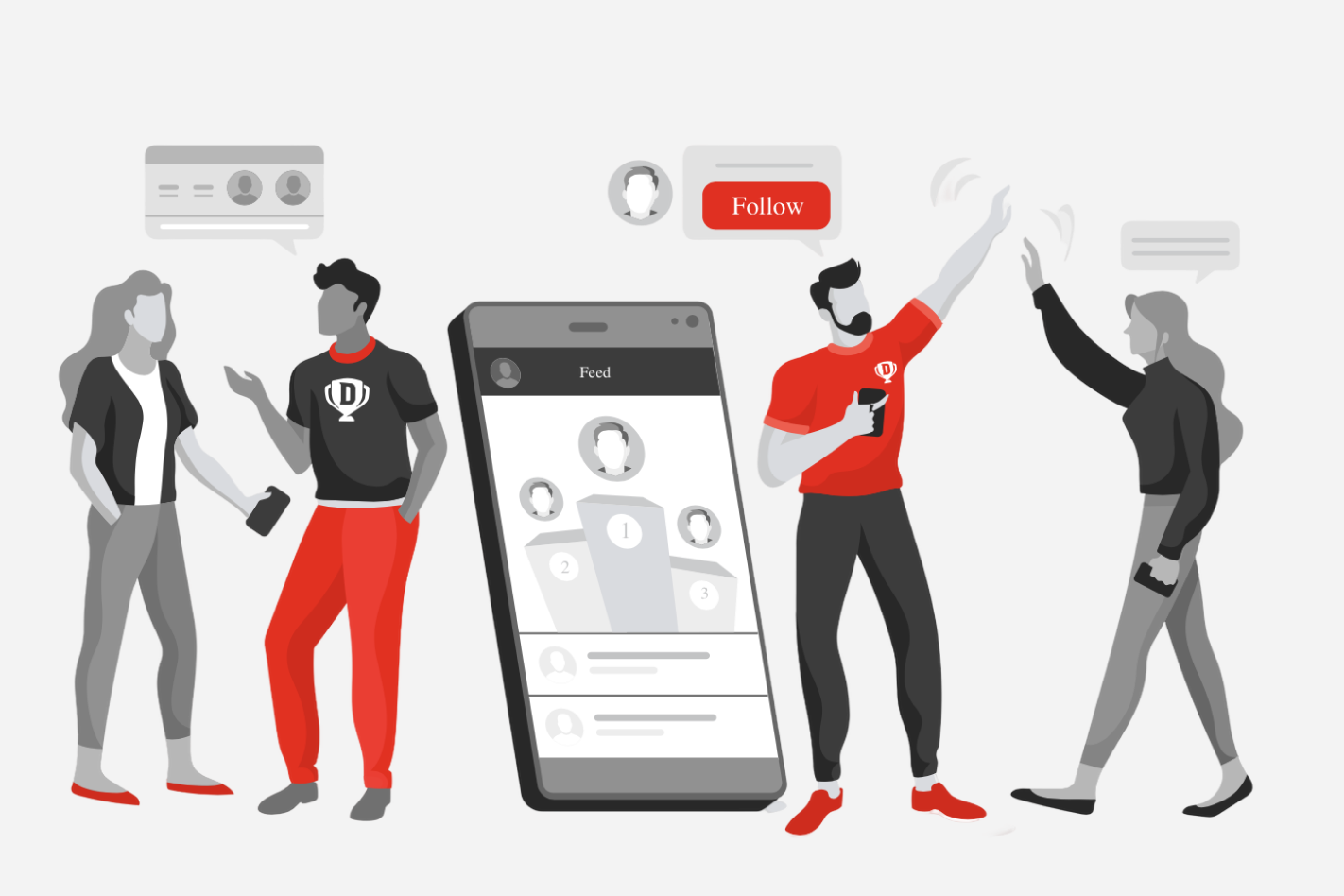
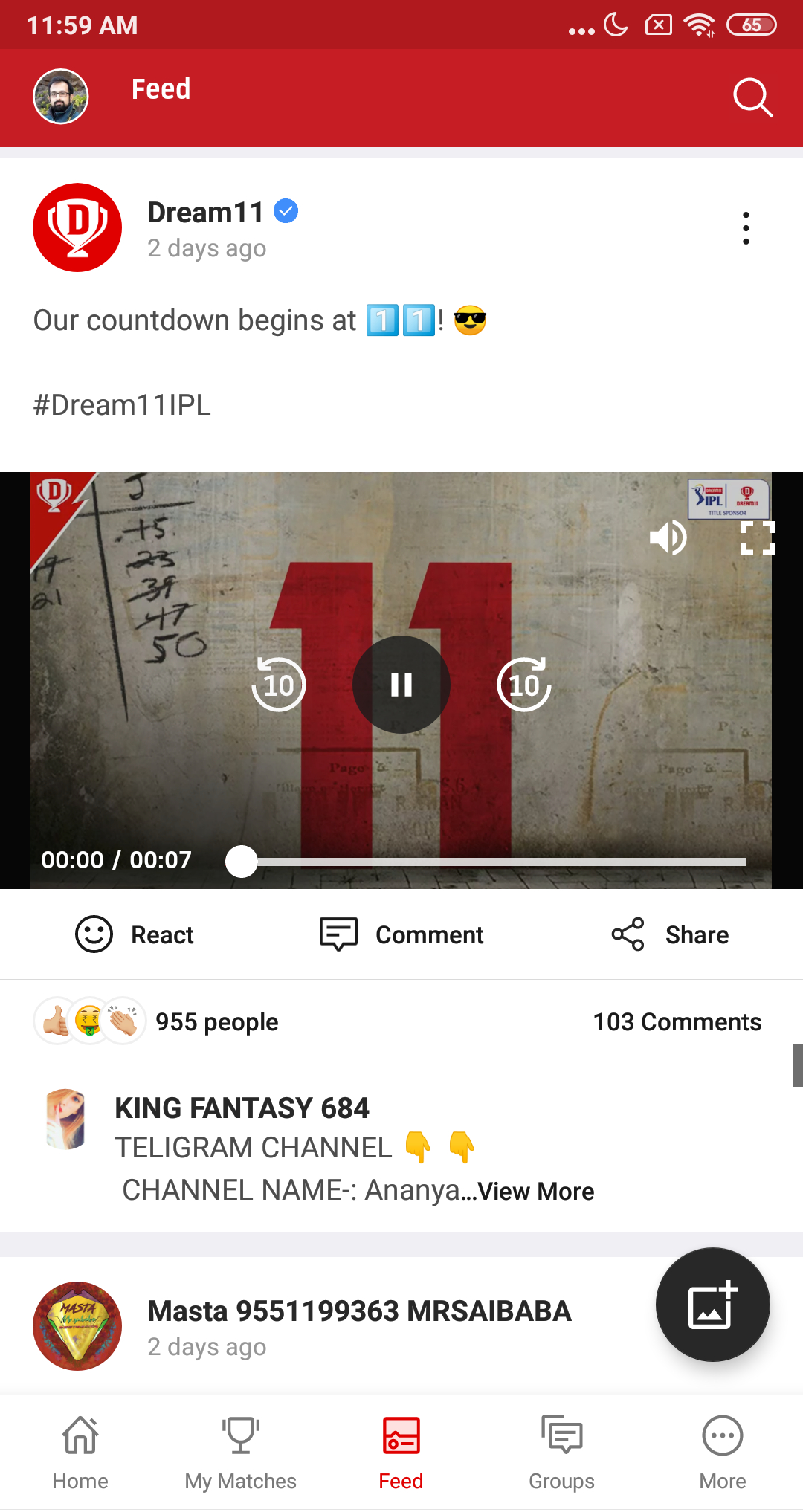
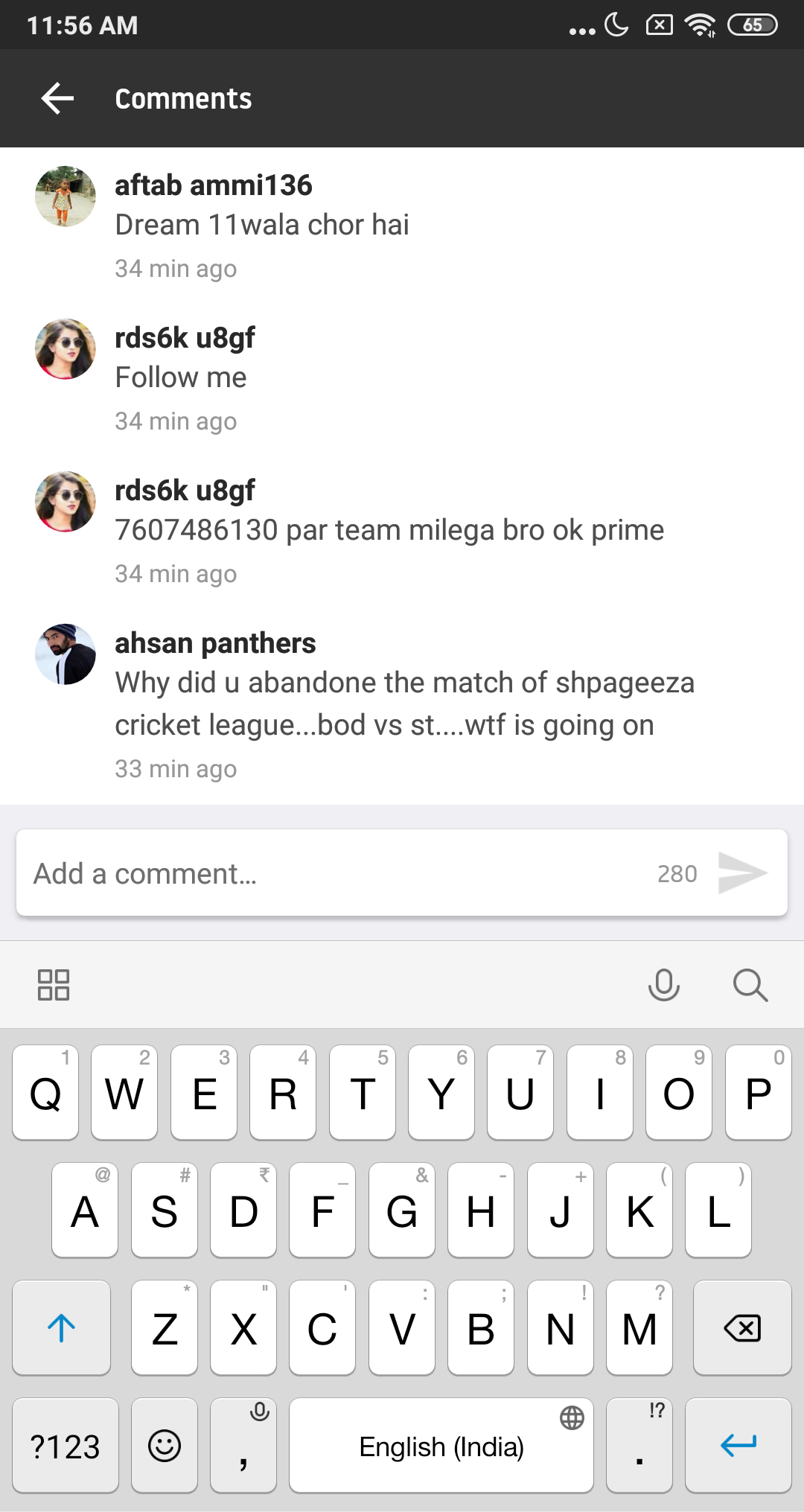
Feed: test the social network model
What we learned
Follower farming shifted activity to YouTube and Telegram.
Teams became something users promoted and sold.
There was limited original user-generated content.
Moderation and service costs were high.
What worked
Daily engagement increased.
Private contests increased participation.
Polls and quizzes were popular.
Feed drove engagement, but had limited impact on gameplay and long-term retention.
What we built
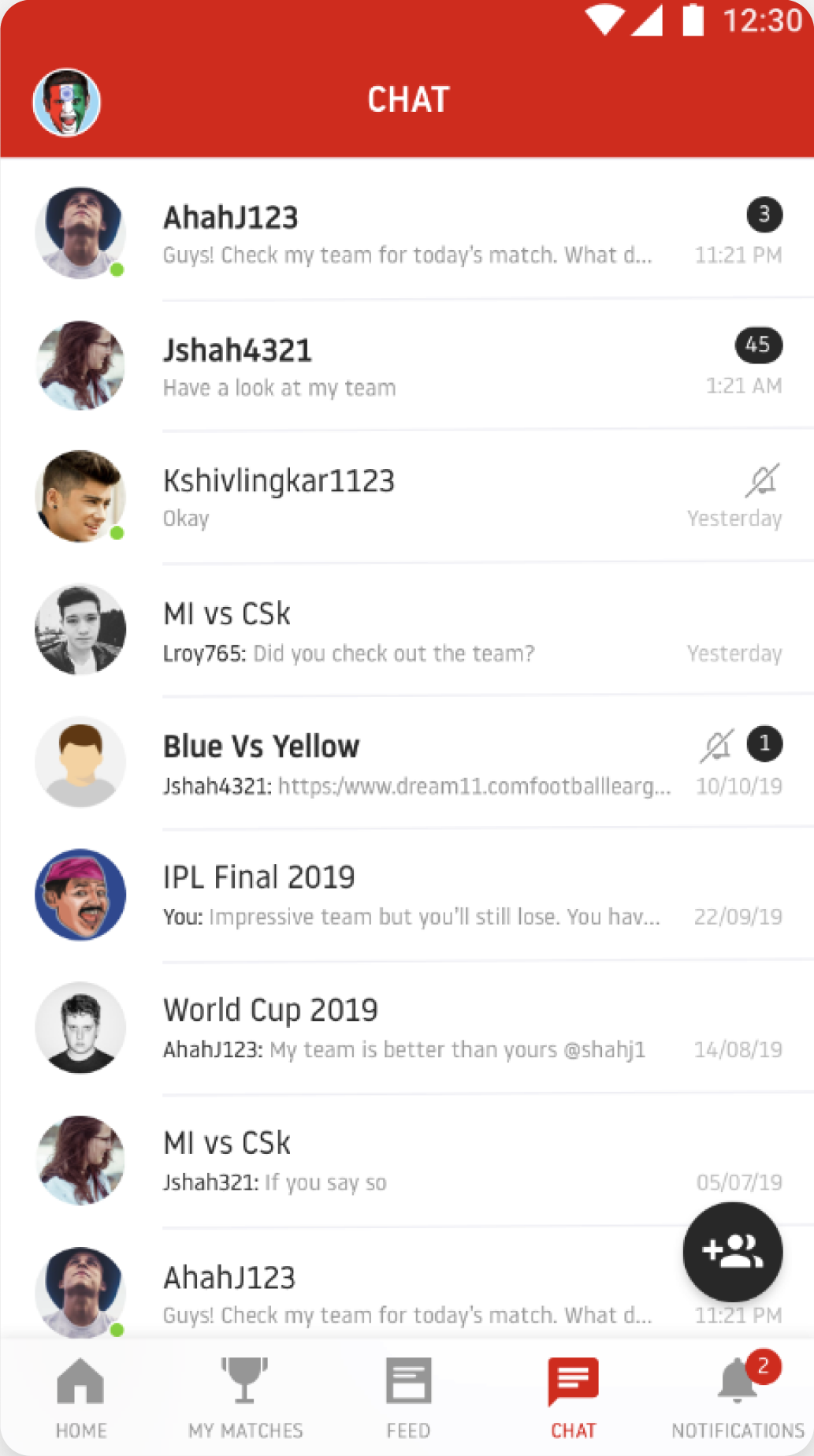
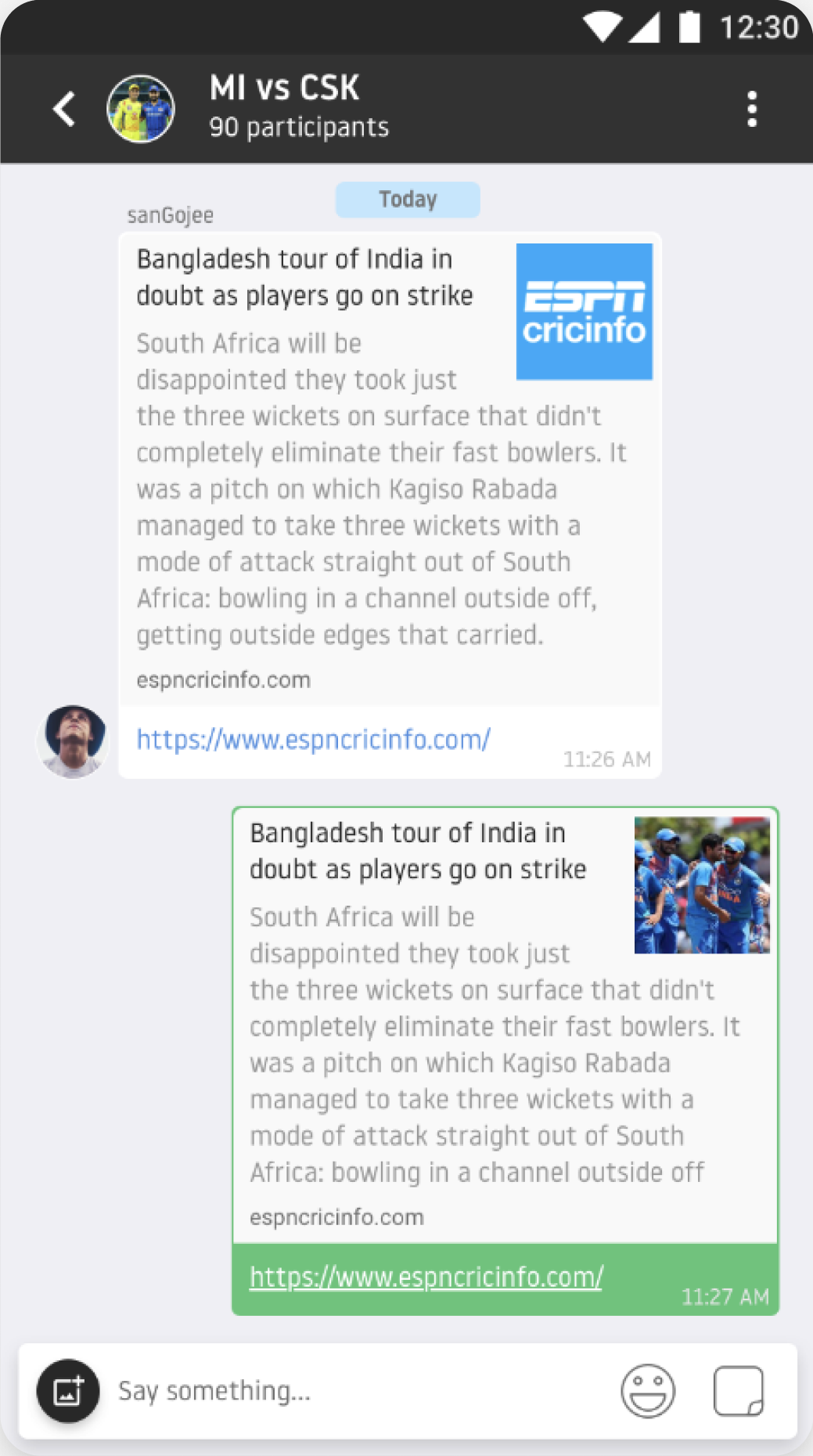
Chat: bring social closer to gameplay
What we learned
Conversations were limited.
There was no strong reason to return.
Too many private contests created confusion.
Only 8% of users posted; most consumed.
What worked
Large private contests performed well.
Private contest fill rates improved.
Creation and sharing of private contests increased.
Early signs showed growth in mid-sized and large local groups, with slight retention increase ~1.5% post IPL.
What we built
Winners: test social proof
What we learned
Winners were hesitant to share videos, identities and stories.
The experience required manual moderation.
Profiles lacked complete gameplay statistics.
What worked
Users actively searched for recent Mega Contest winners.
Video testimonials and state-level segmentation worked.
Mega Contest participation increased among new users.
~12% reduction in trust-related complaints
8% WoW retention boost among users engaging 3+ times
We now had real data on user behaviour, not just assumptions.
We needed to understand the ‘why’ behind the ‘what’.
User research
Understanding the behaviour behind the data
Contextual inquiry and behavioural research helped us understand how people actually wanted to play together.
Contextual inquiry, behavioural study
32Users interviewed
8User groups
6States
Quantitative research
10+Surveys
100,000+Responses
What were players actually looking for?
I want playing fantasy sports to be fun and exciting.
‘I want to earn from my sports knowledge.’
Learn from experts.
Get help from friends.
Improve my teams.
Share knowledge.
‘I want to connect and play with like-minded people.’
Build recognition.
Compete with others.
Discuss sports and strategy.
‘I want to have fun while playing with others.’
Play with friends.
Have fun with other Dream11 users.
‘I want to collaborate with friends and win more.’
What the research found
Five archetypes, two ways of playing.

Anonymous Gamer
“I want to keep playing solo.”
Collaborative Gamer
“We don’t play against each other. We don’t take each other’s money.”

Collaborative Influencer
“What’s there to hide from friends? I share my strategy so they can improve.”
Monetising Influencer
“If people I know find out, my followers go up.”
Competitive Gamer
“Winnings turn into a party. Beating my friends is the thrill.”
Won’t play against people they know
COLLABORATIVE GAMEPLAY
They play with people they know, not against them.
COMPETITIVE GAMEPLAY
Beating someone they know is the point.
Plays against people they know
They did not want another social network.
They wanted to play together.
The pivot
Gameplay was the product.
Social behaviour worked when it helped people play, compete or collaborate.
We had to build
Social Network Gameplay.
Turning research into a roadmap
Ideation, prioritisation and roadmap creation
Discover user problems
Prioritise problems
Ideate
Prioritise solutions
Build the roadmap
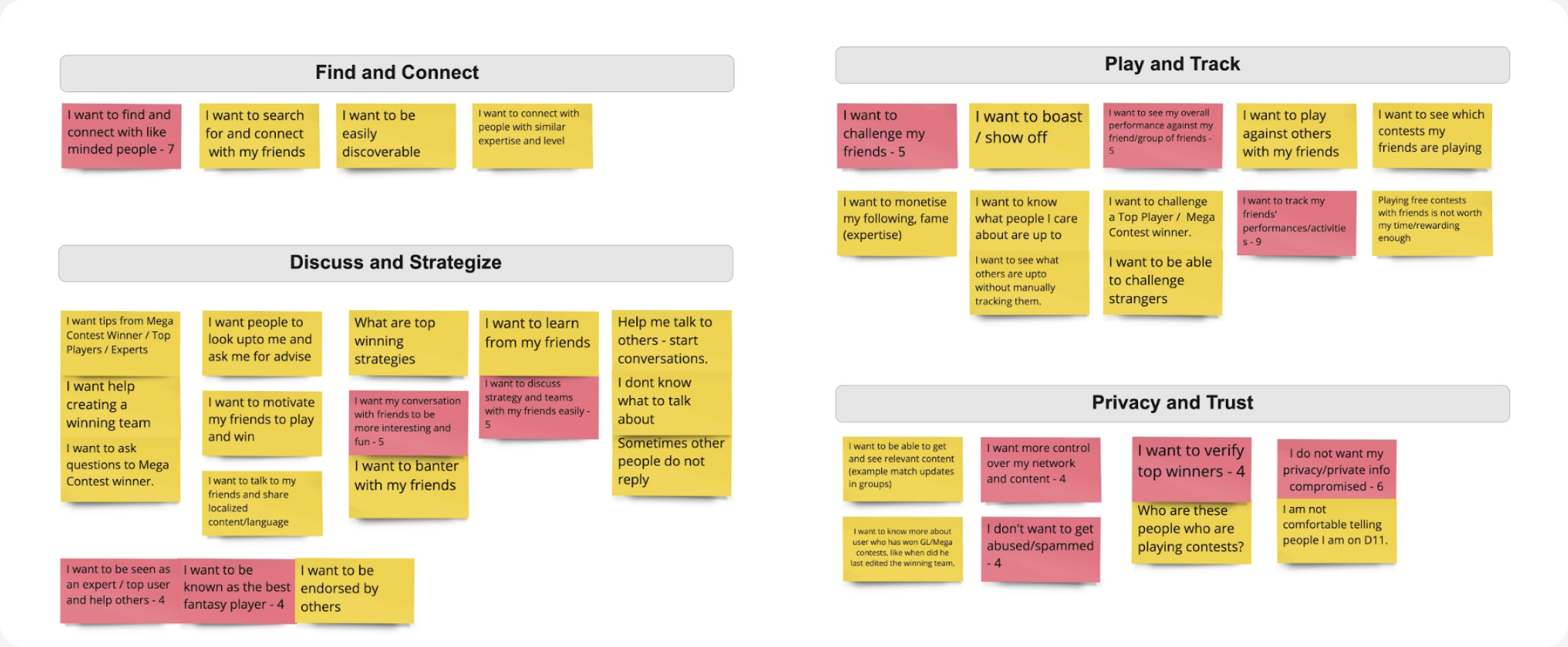
Each problem was prioritised against:
User value
How much the problem actually hurts the player.
TAM
How many players it affects.
Business impact
What solving it moves for the business.
Resulted in
Social Gameplay as a core experience
Feed
Chat
Winners
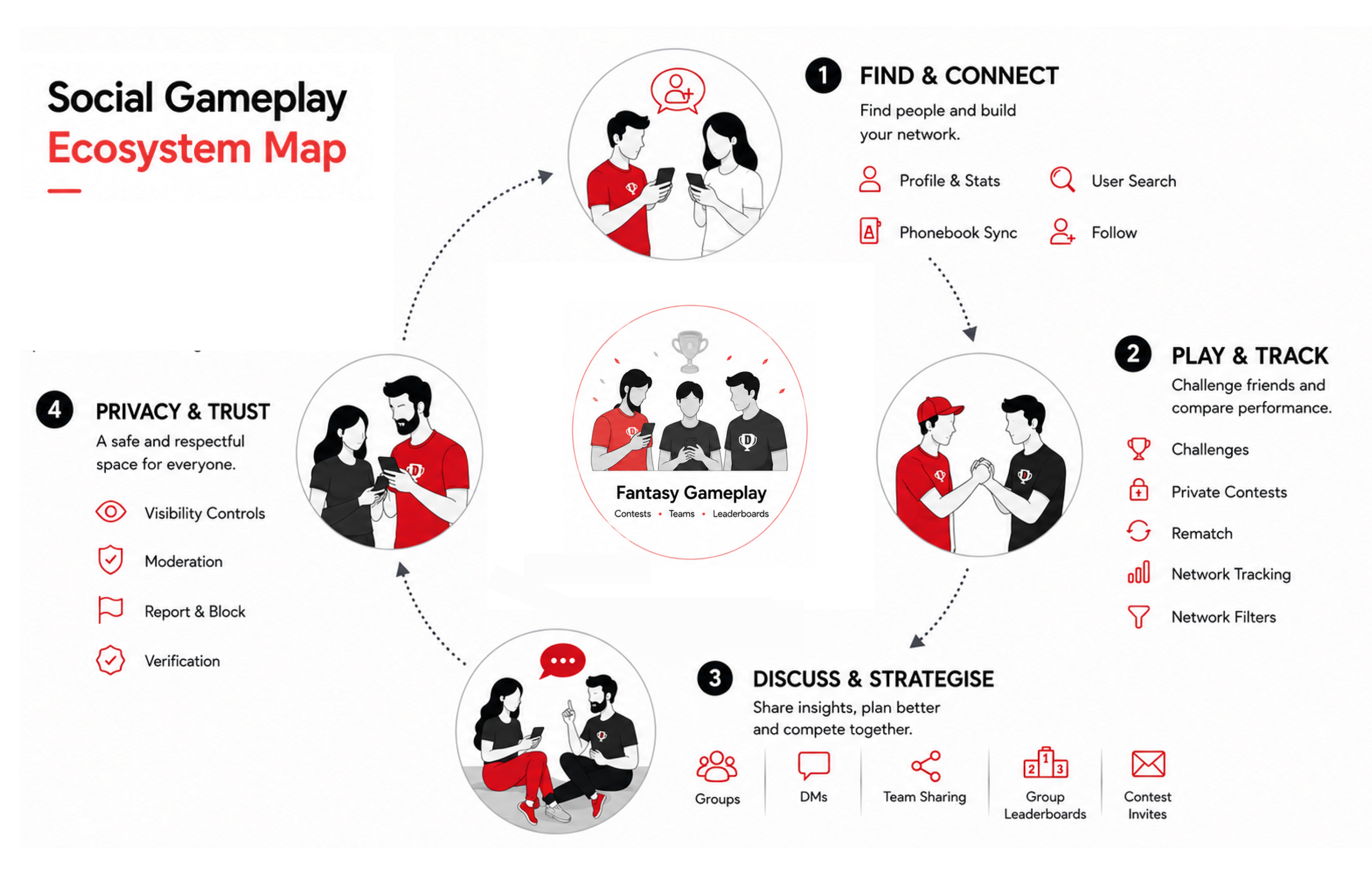
Vision: Enhance Dream11’s fantasy gaming experience by bringing people together.
Collaborative Gameplay
Play together, not only against each other.
Competitive Gameplay
Play and compete against the people you know/your circle.
Privacy and controls at the core
Ability to control
Product features
Bringing social gameplay into Dream11
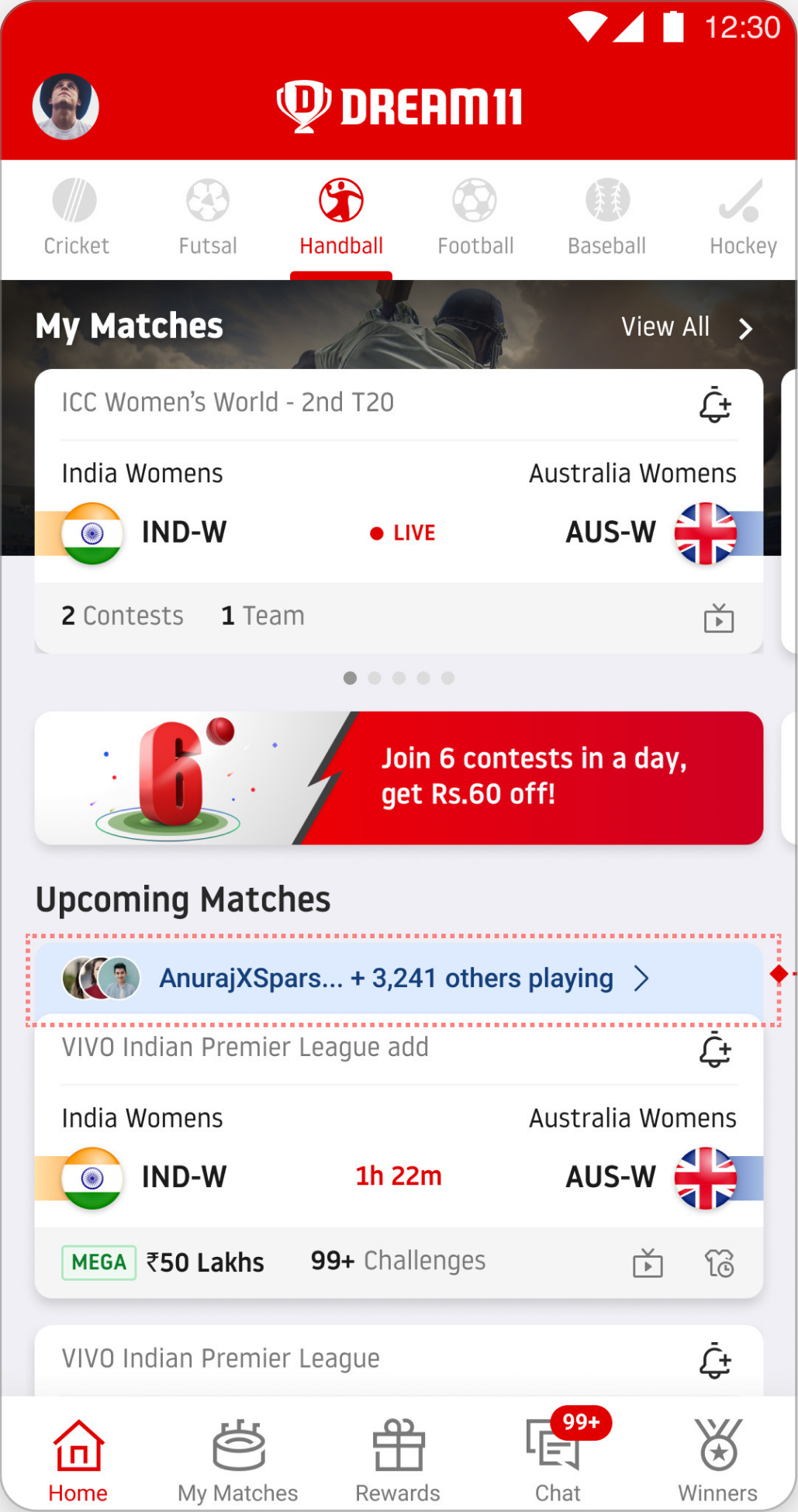
Home - track network
Showed increase in
match joins when users had network
playing the match
Leaderboard - track network
Profile - stats focused
Deep dive
Chat Groups
It shipped as Chat in 2020.
We renamed it Groups as the experience evolved around gameplay, not just messaging.
New groups
How groups embodied the social gameplay approach
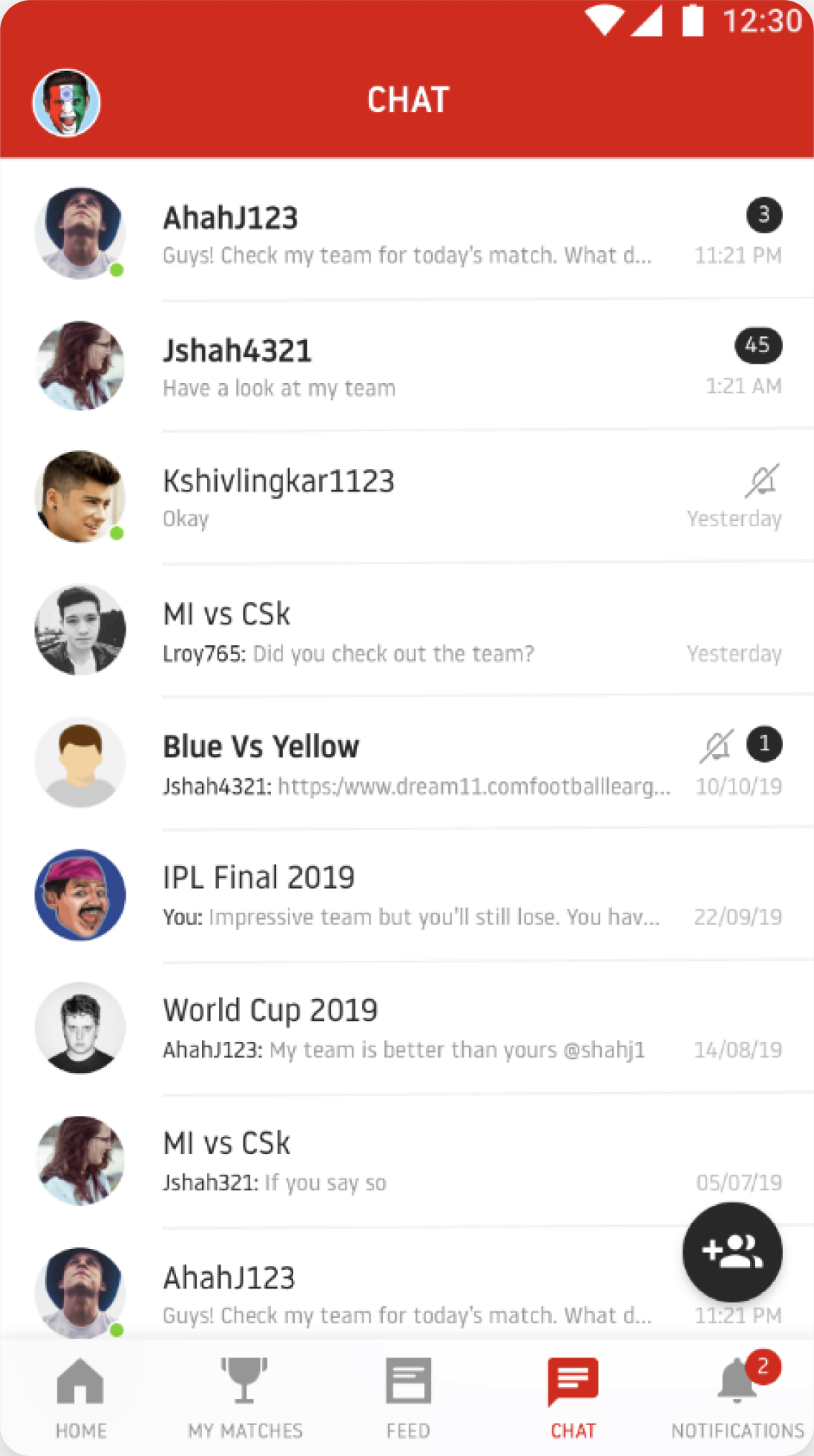
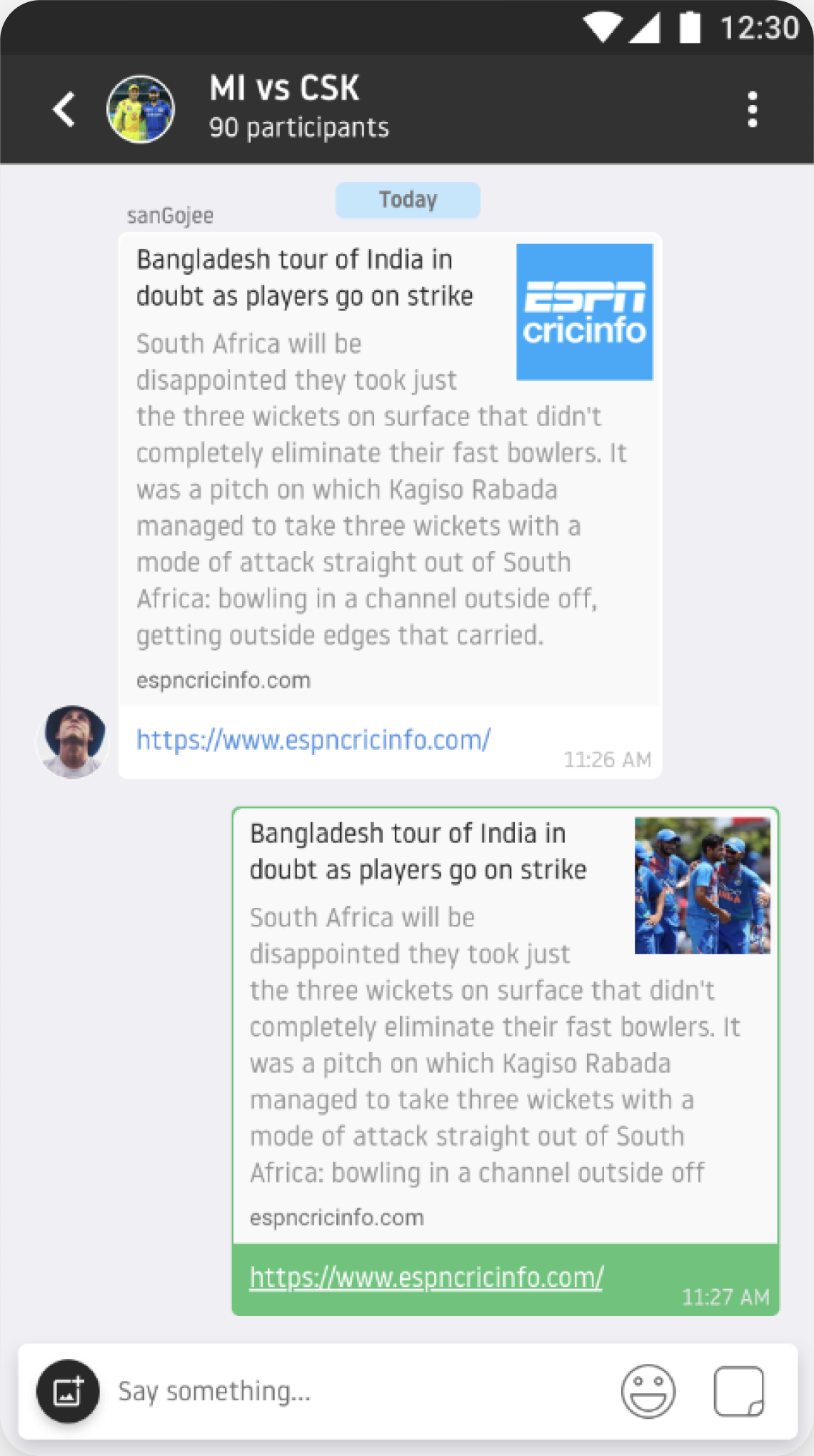
The old model was chat-first
Message focused
Familiar chat patterns
Limited gameplay integration
Little unique value
Relied on user-initiated actions
New groups
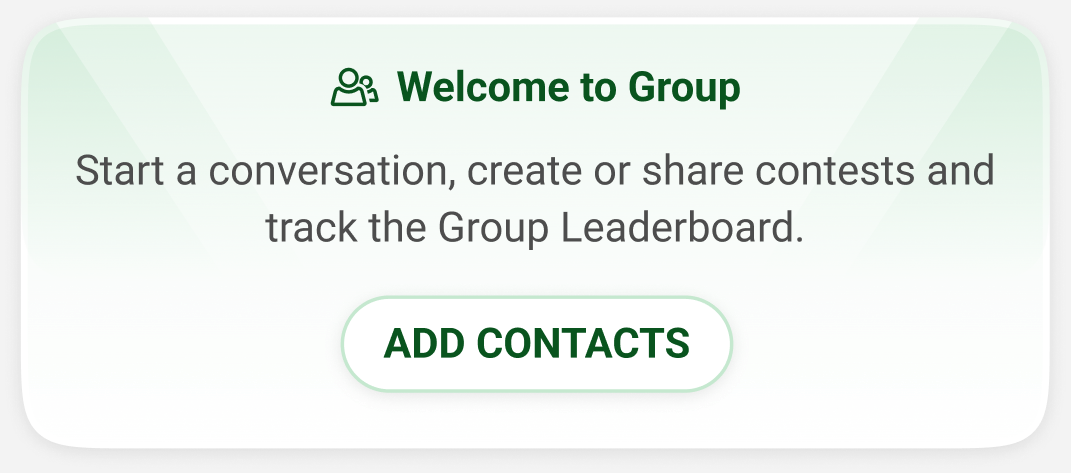
What the users saw when they landed on Groups
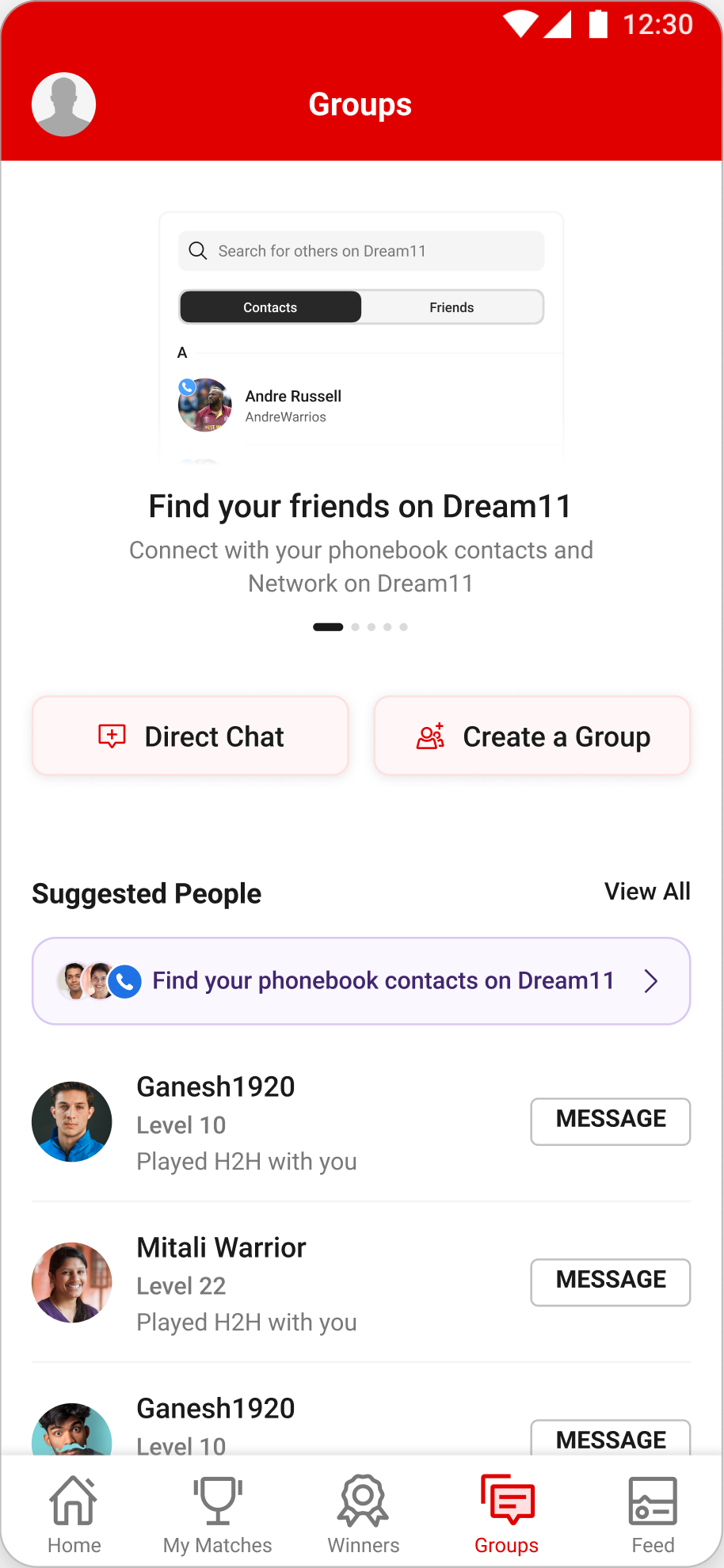
Groups - zero state
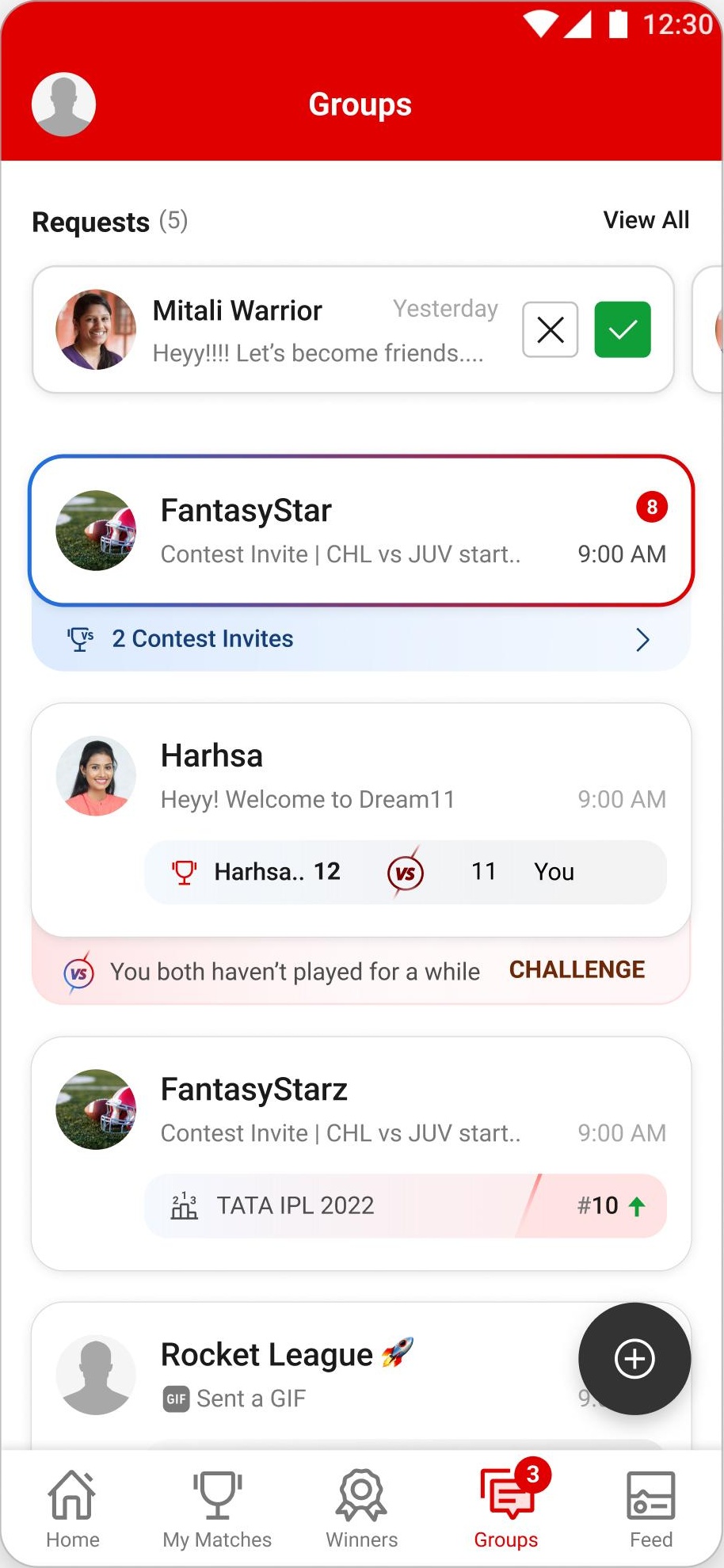
Groups - with multiple channels
The new model was gameplay-first
More gameplay focused
Groups and DMs
Quick actions
Privacy and controls
New groups
What new users saw when they landed on Groups
82%
began creating a group and never finished. 2.5M people.
Turn the zero state into a starting point.
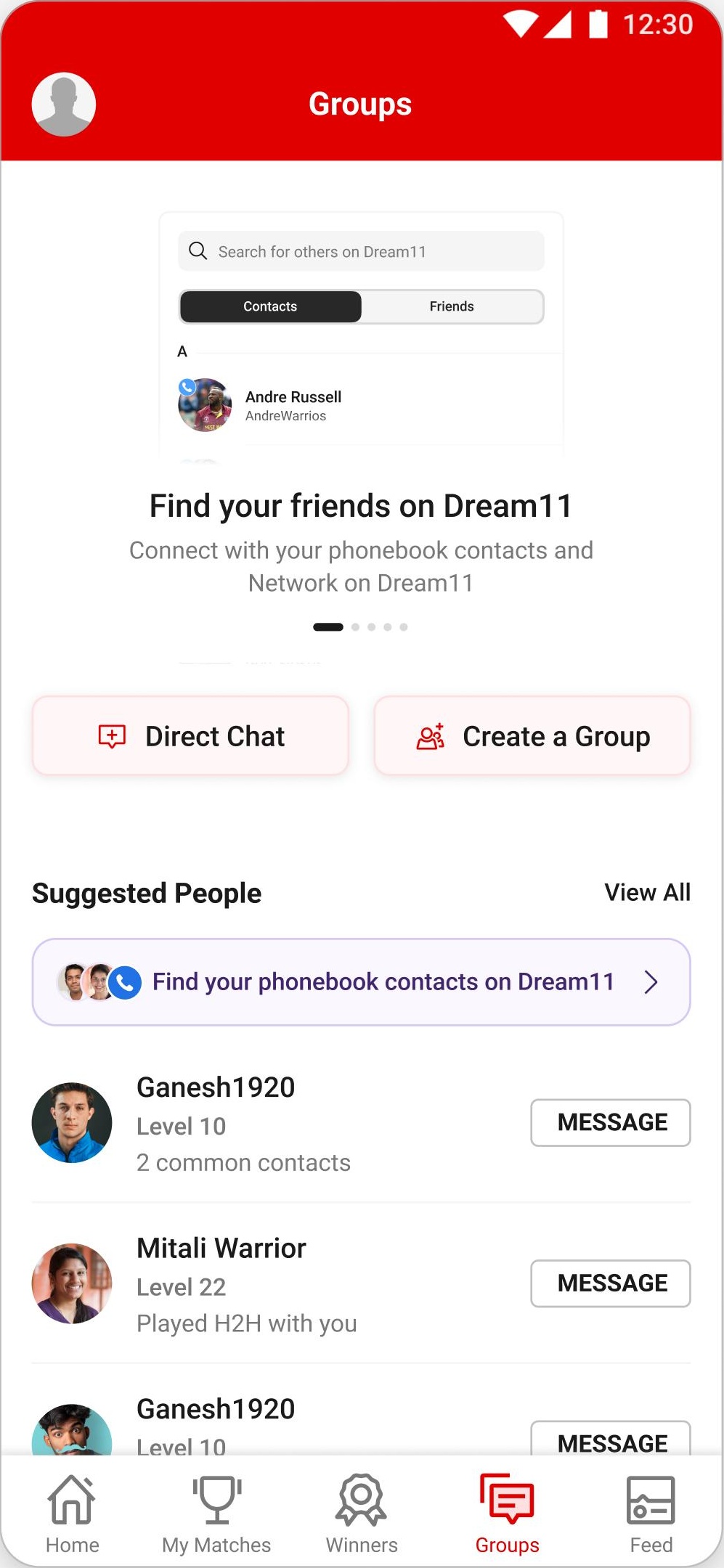
Create a new channel
Phonebook sync
to find people you know
Suggested people
from affinity graphs and
common network
New groups
What new users saw when they landed on Groups
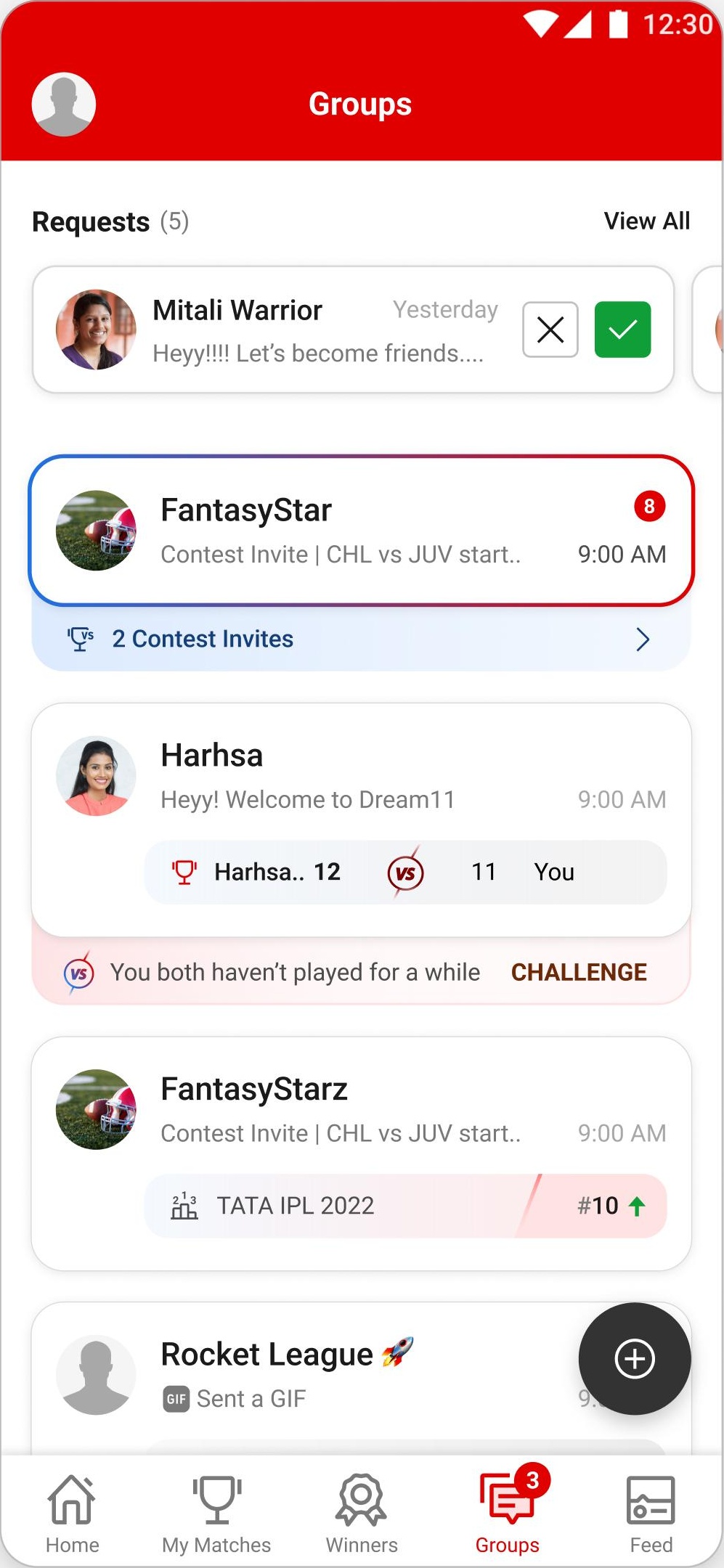
DM requests
Unread channels
Create new channels
New groups
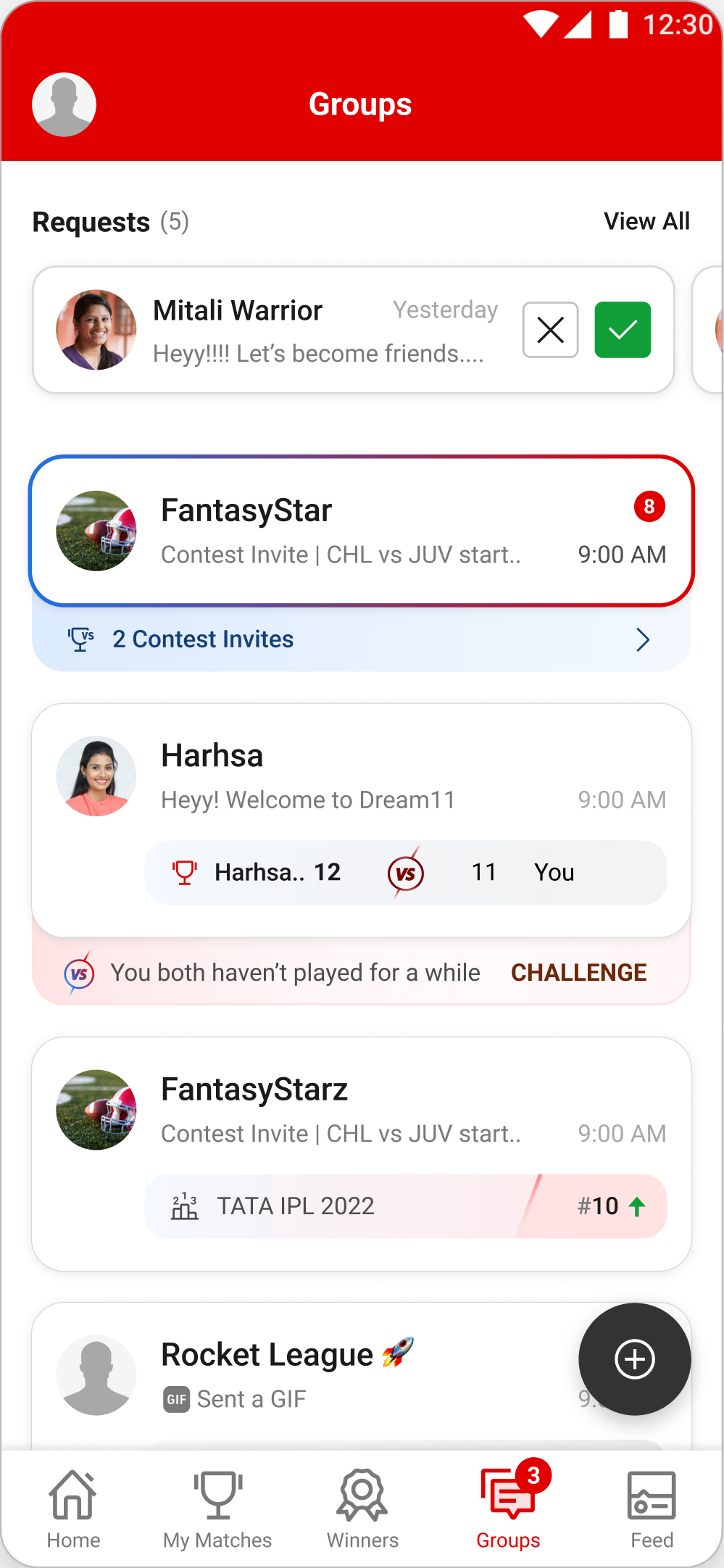
Put gameplay actions within reach
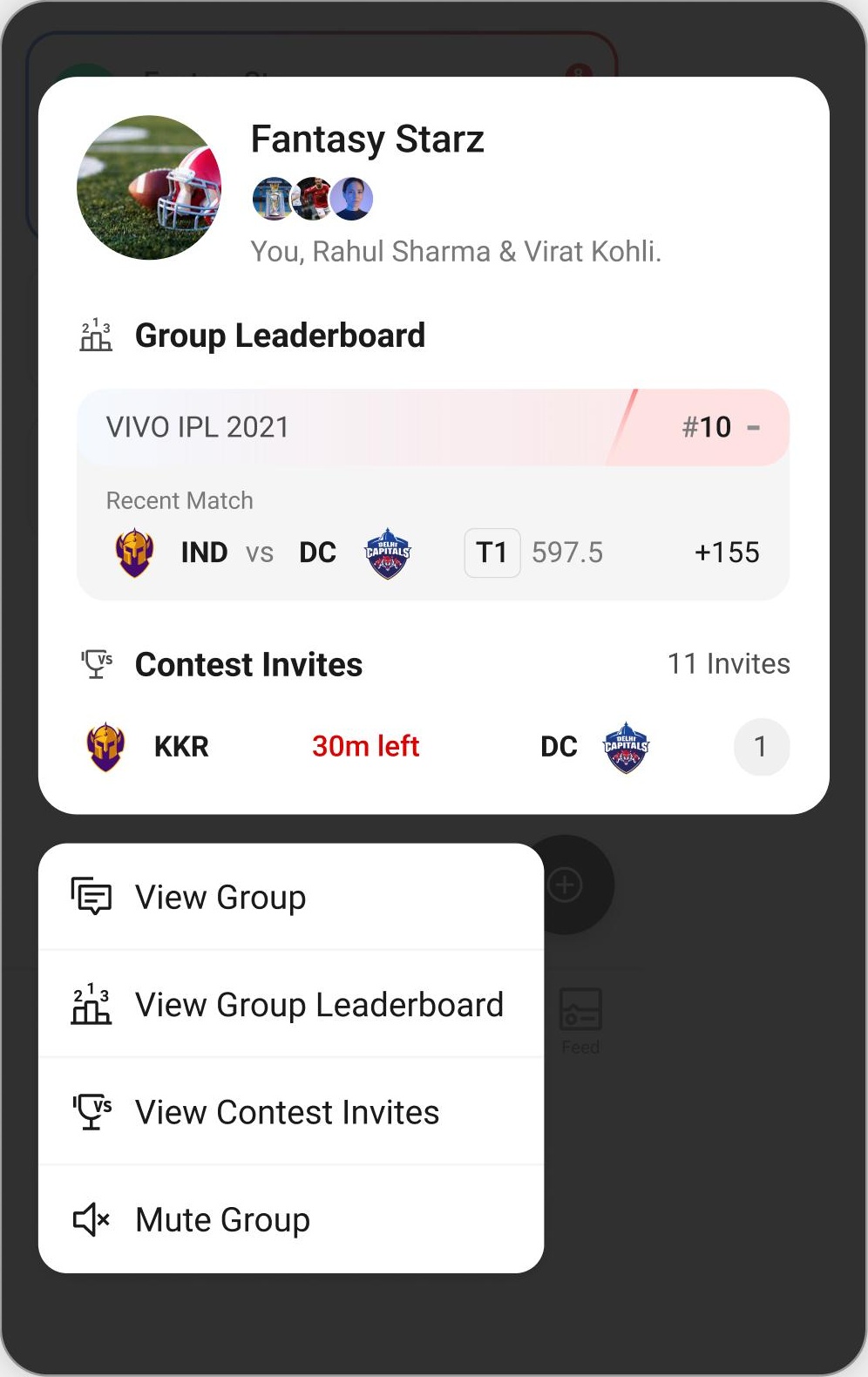
Long press for quick actions.
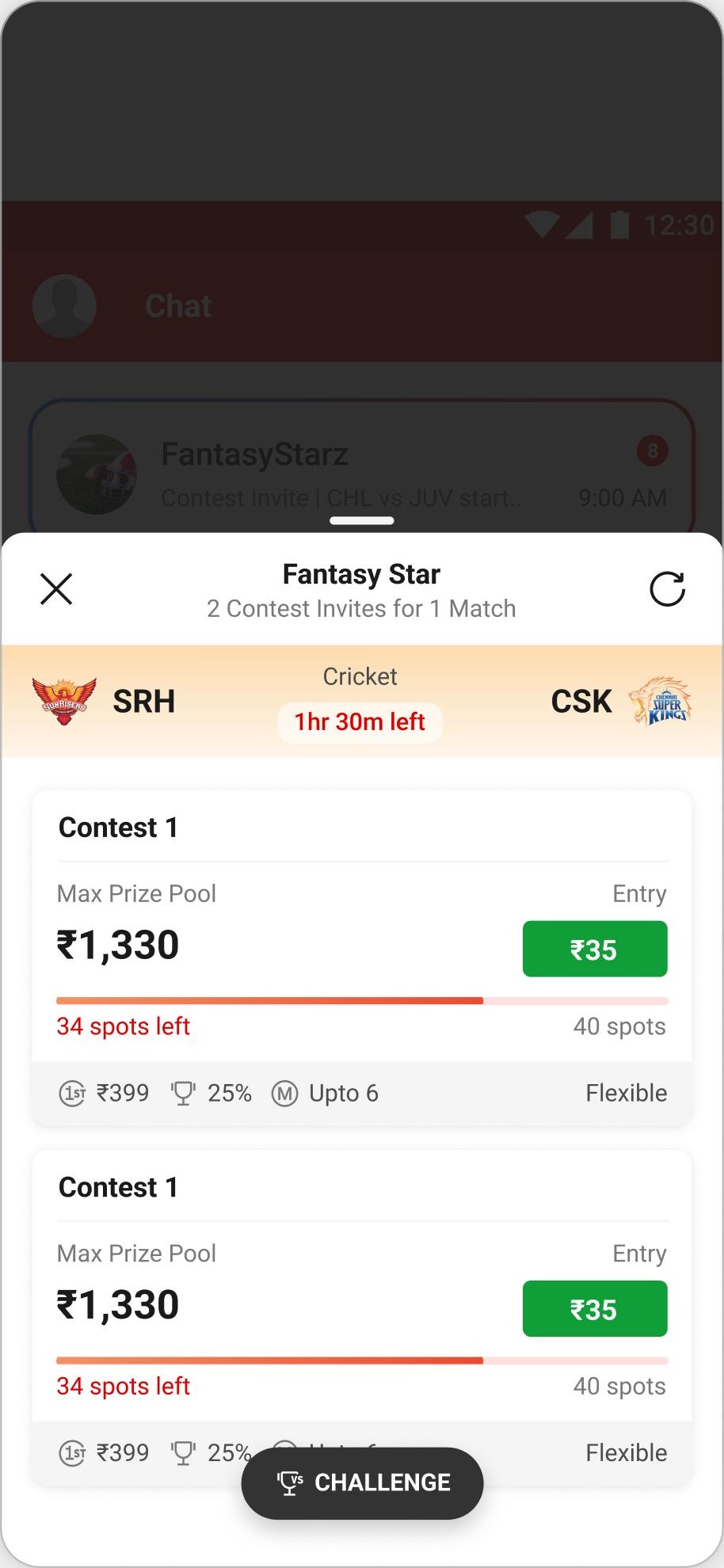
Challenge from the match card.
Contest invites
grouped by upcoming match.
New groups
What changed after the redesign
What we learned
Rate limits and controls reduced unwanted DM requests and invites.
Contest invites refreshed manually or on page load to reduce system load.
Larger lists increased scrolling for a small fraction of users.
Impact
Group and DM activity increased 4X during IPL 2021.
Contest joins increased 8%.
H2H challenges increased in dormant DMs.
The messaging pane
Where the action was happening
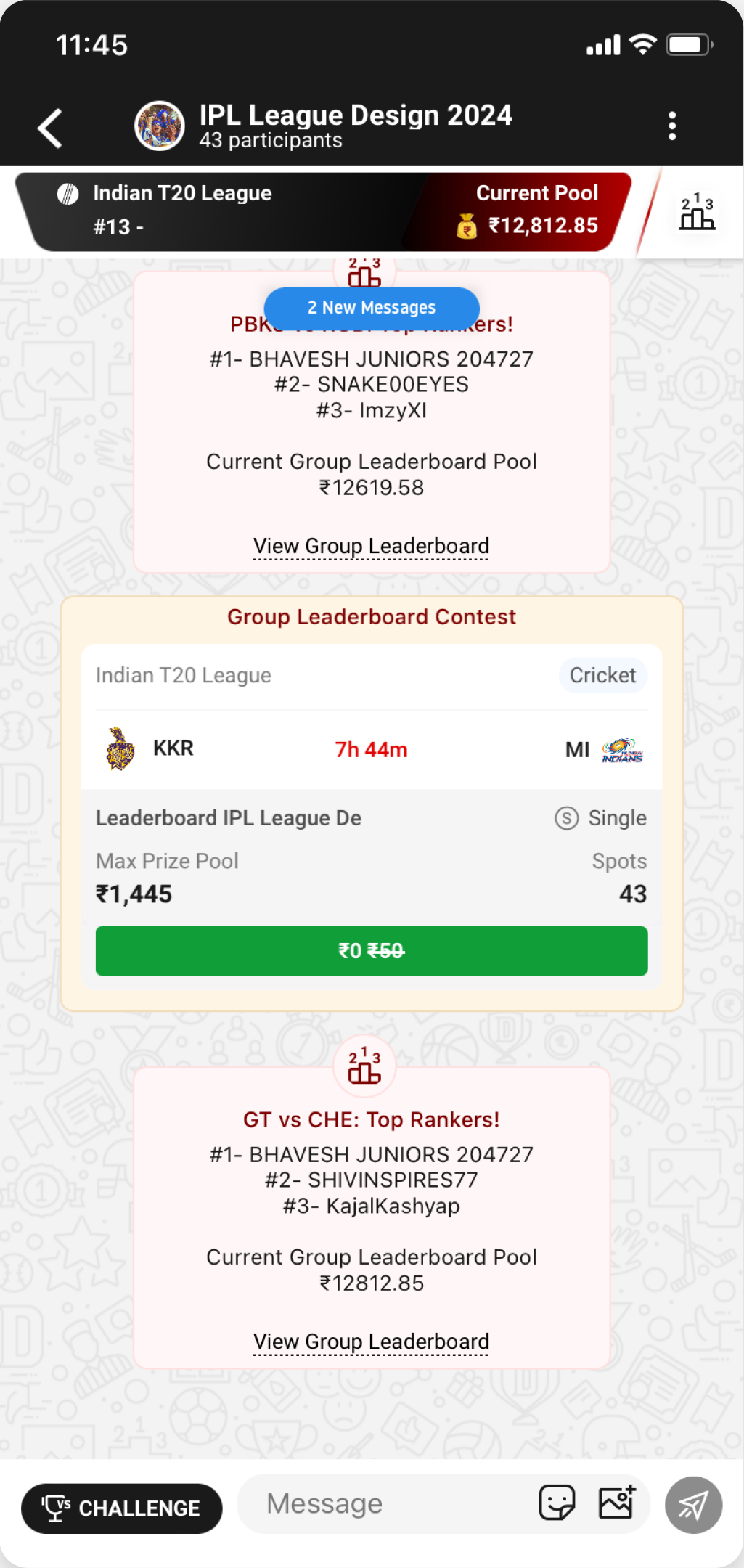
Make gameplay visible inside the conversation
No way to track group performance.
Groups went quiet.
Players missed matches.
Team sharing was cumbersome.
The messaging pane
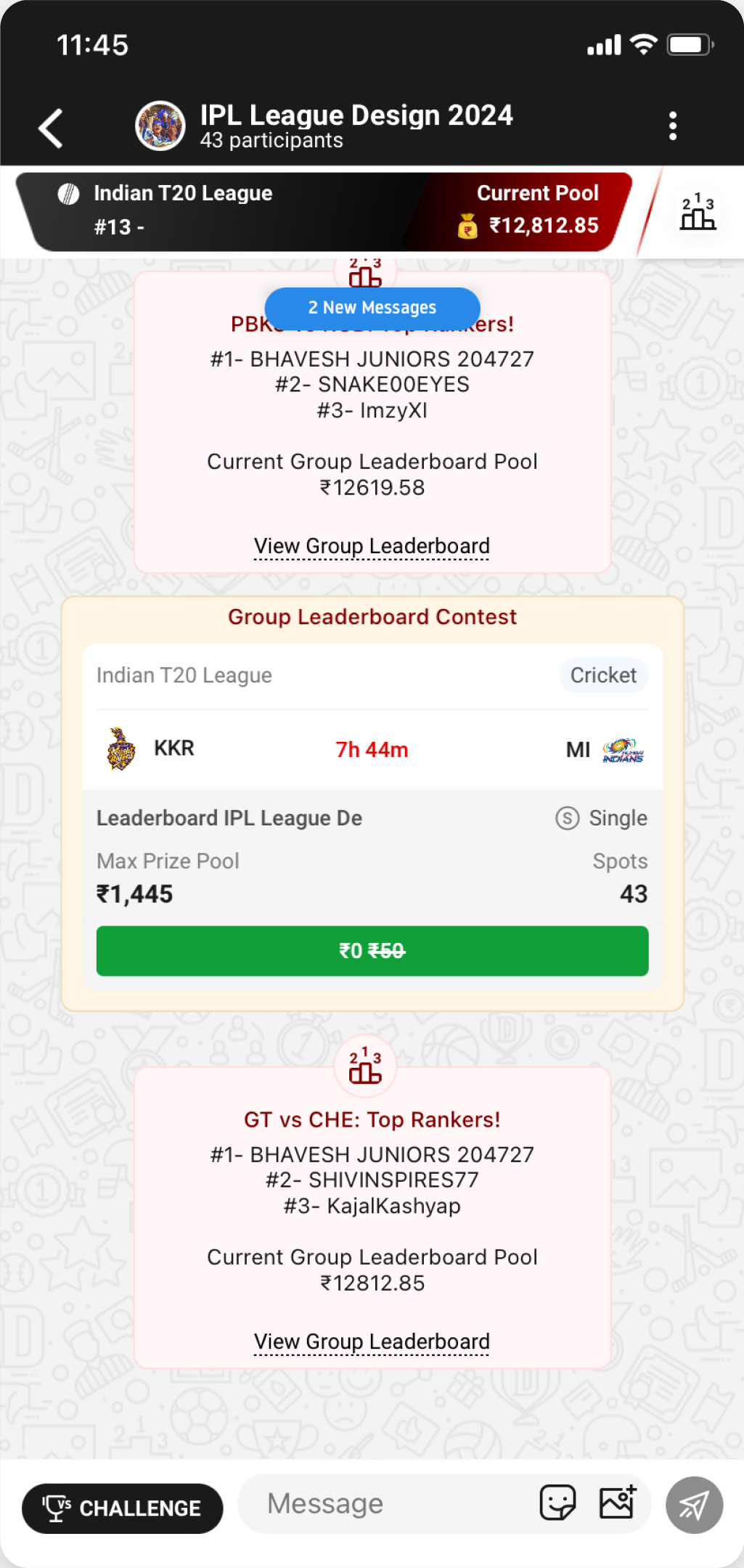
Turn the conversation into a gameplay surface
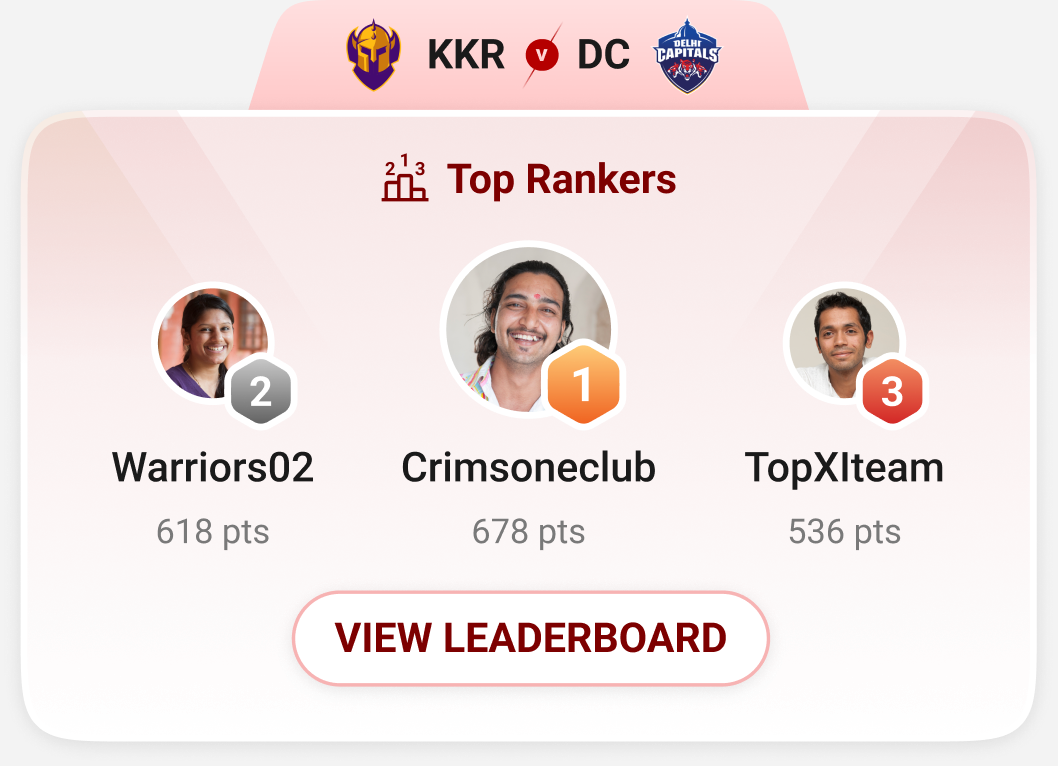
Group leaderboard
and challenge history
Native
gameplay objects
Send challenges
from the thread
The messaging pane
Group leaderboard
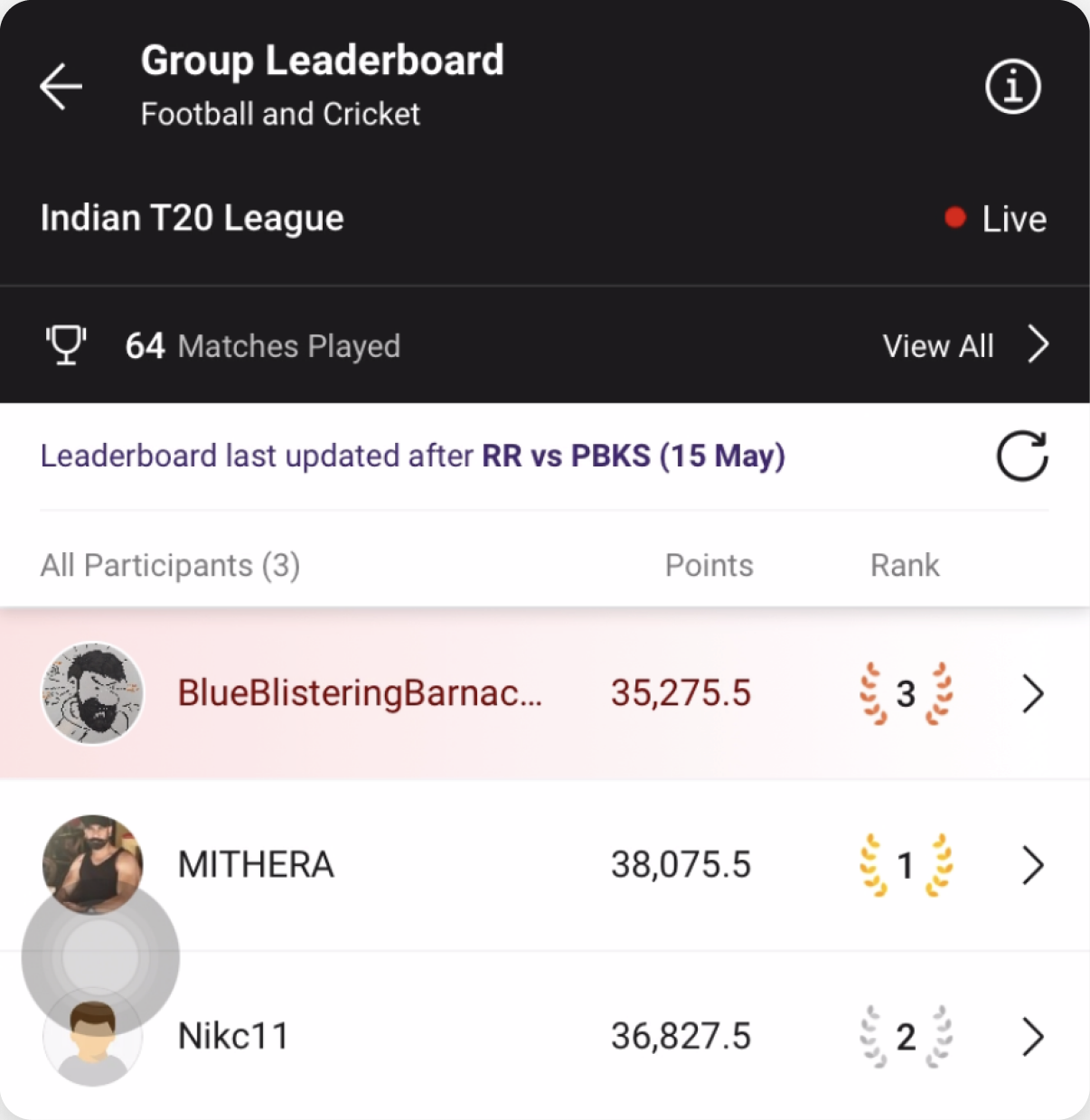
Group leaderboard
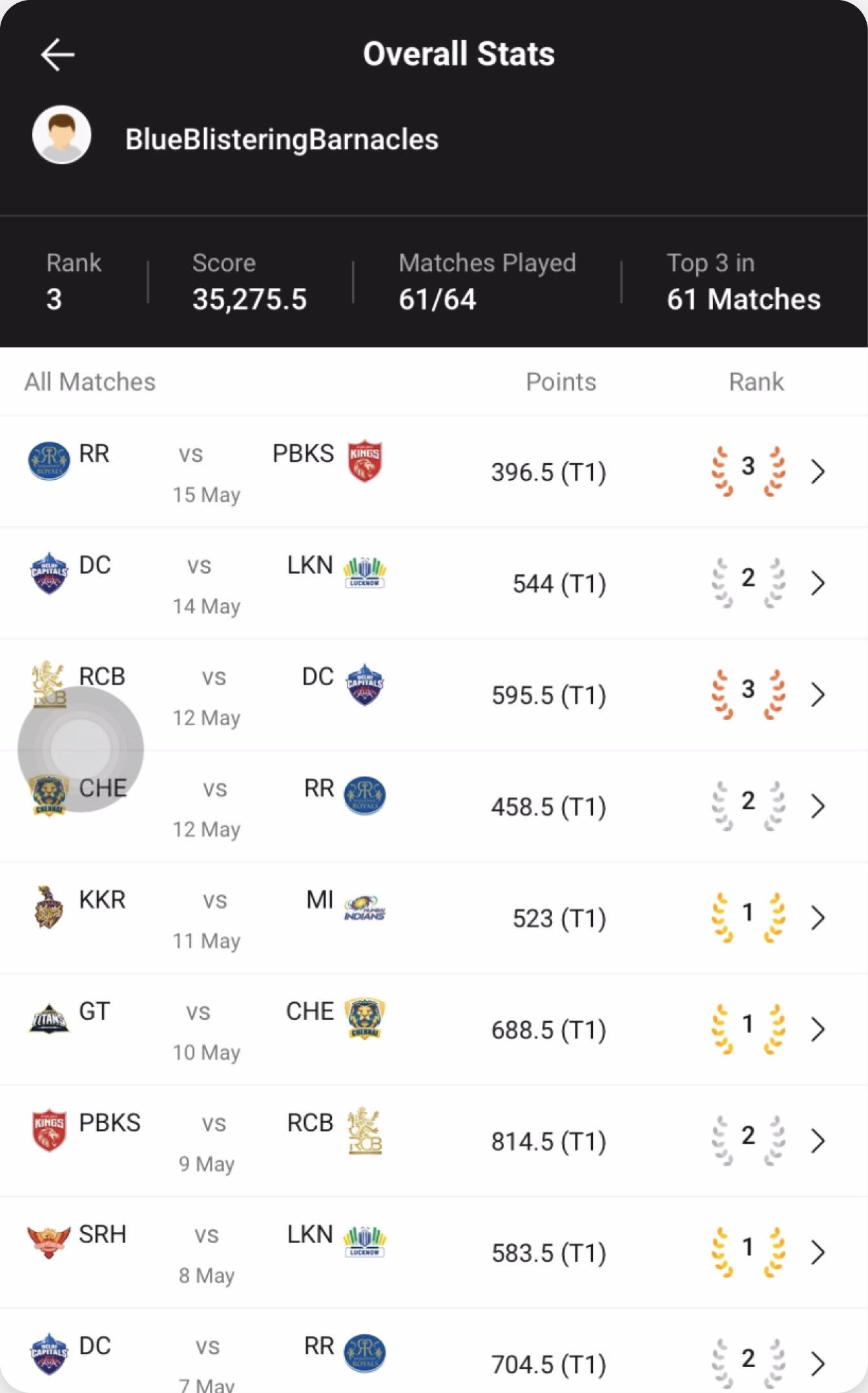
The messaging pane
DMs - playing history and controls
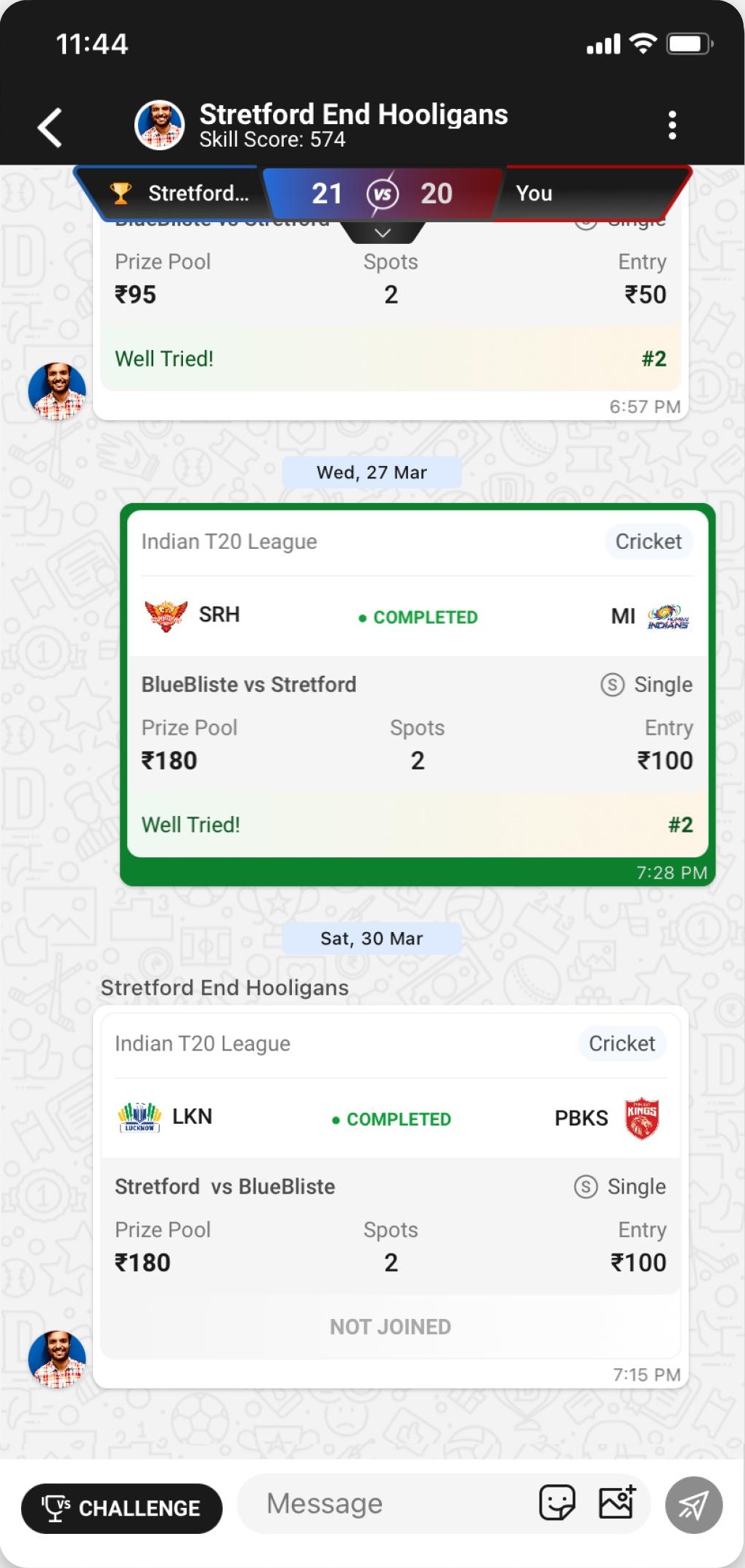
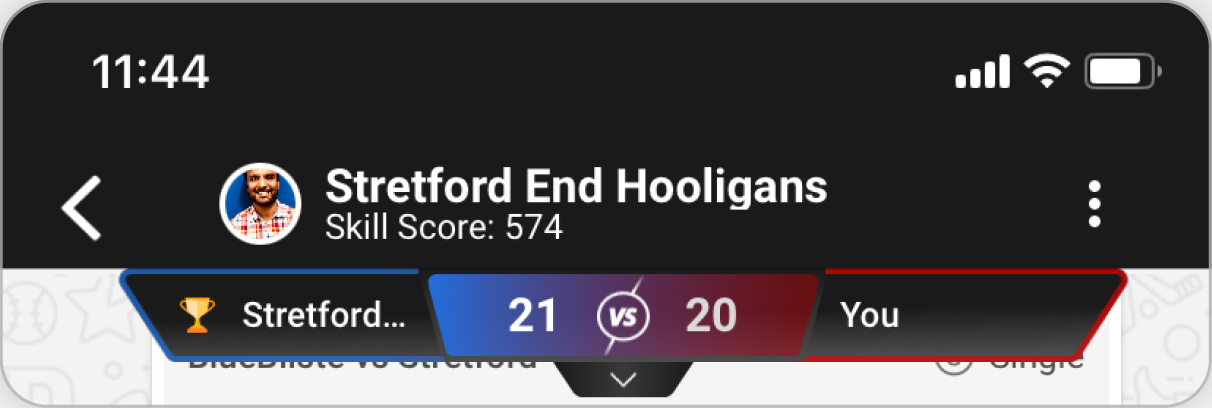
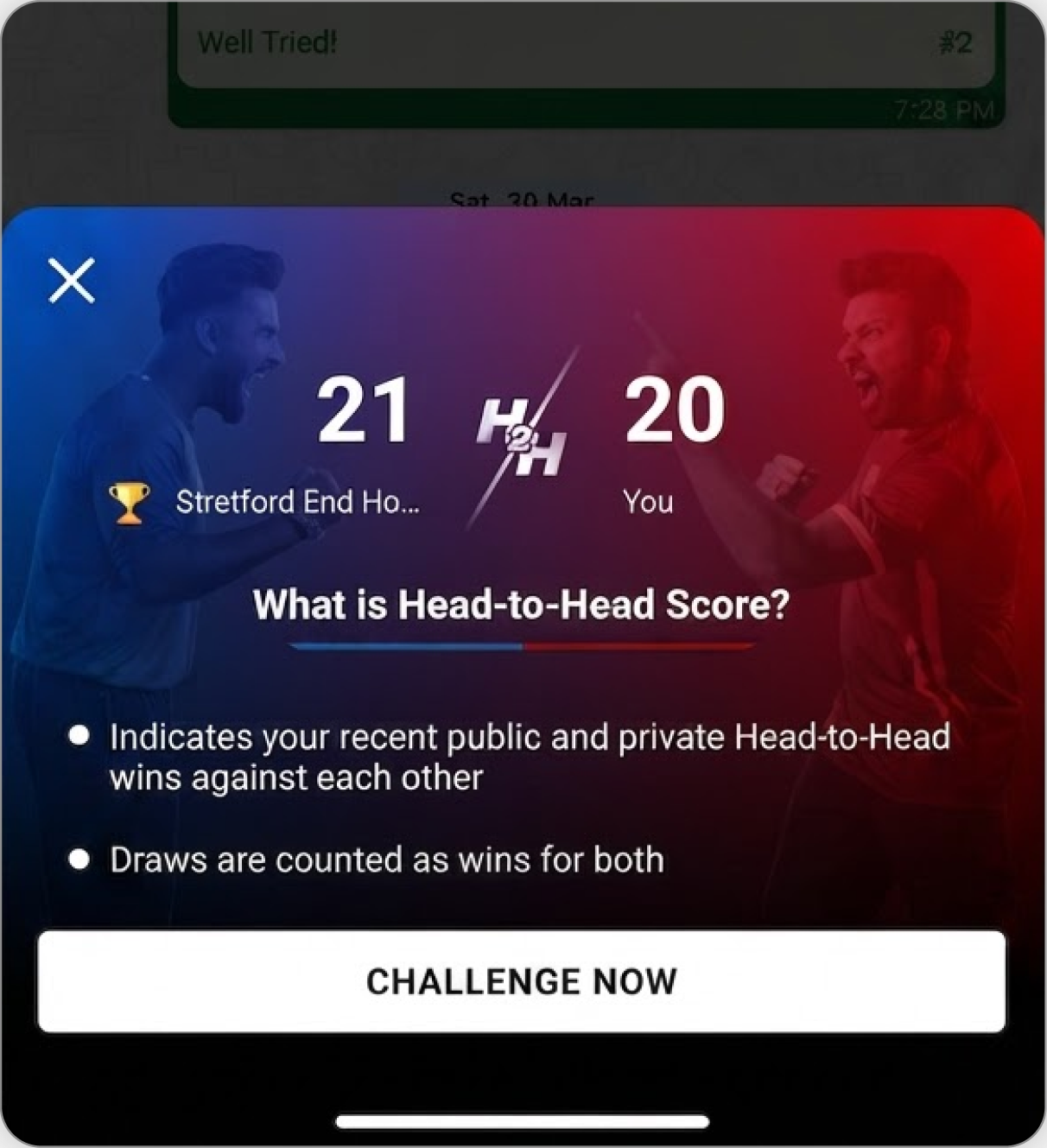
Head-to-head history
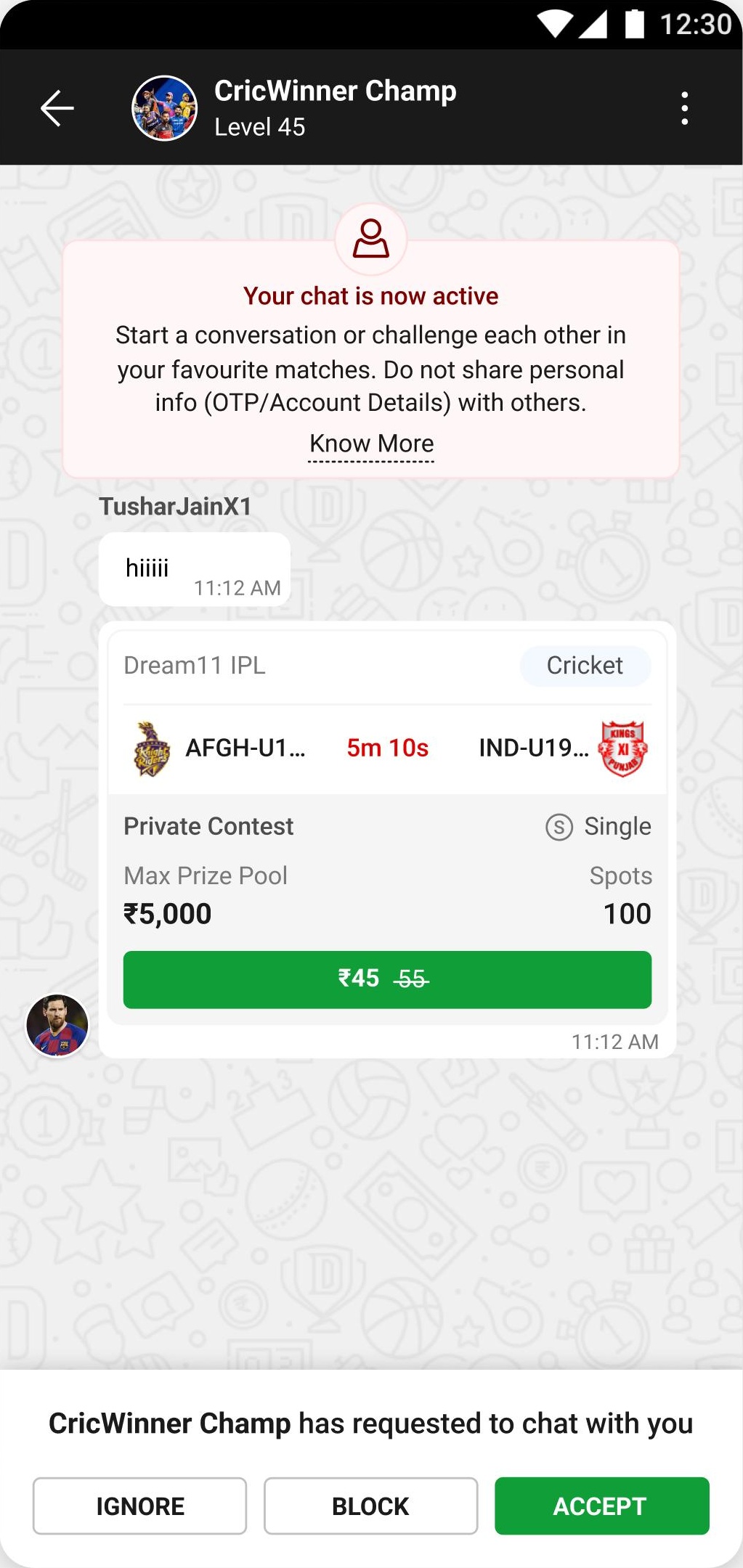
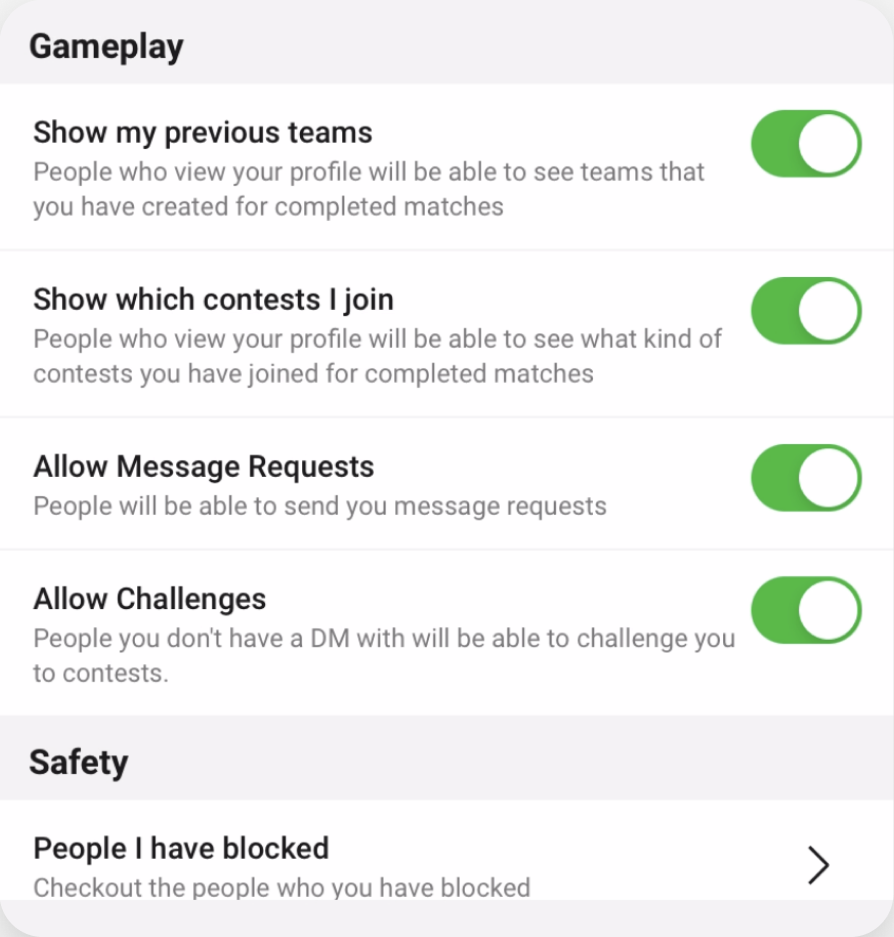
Permissions and controls
The messaging pane
Make gameplay native to the conversation
Shared teams
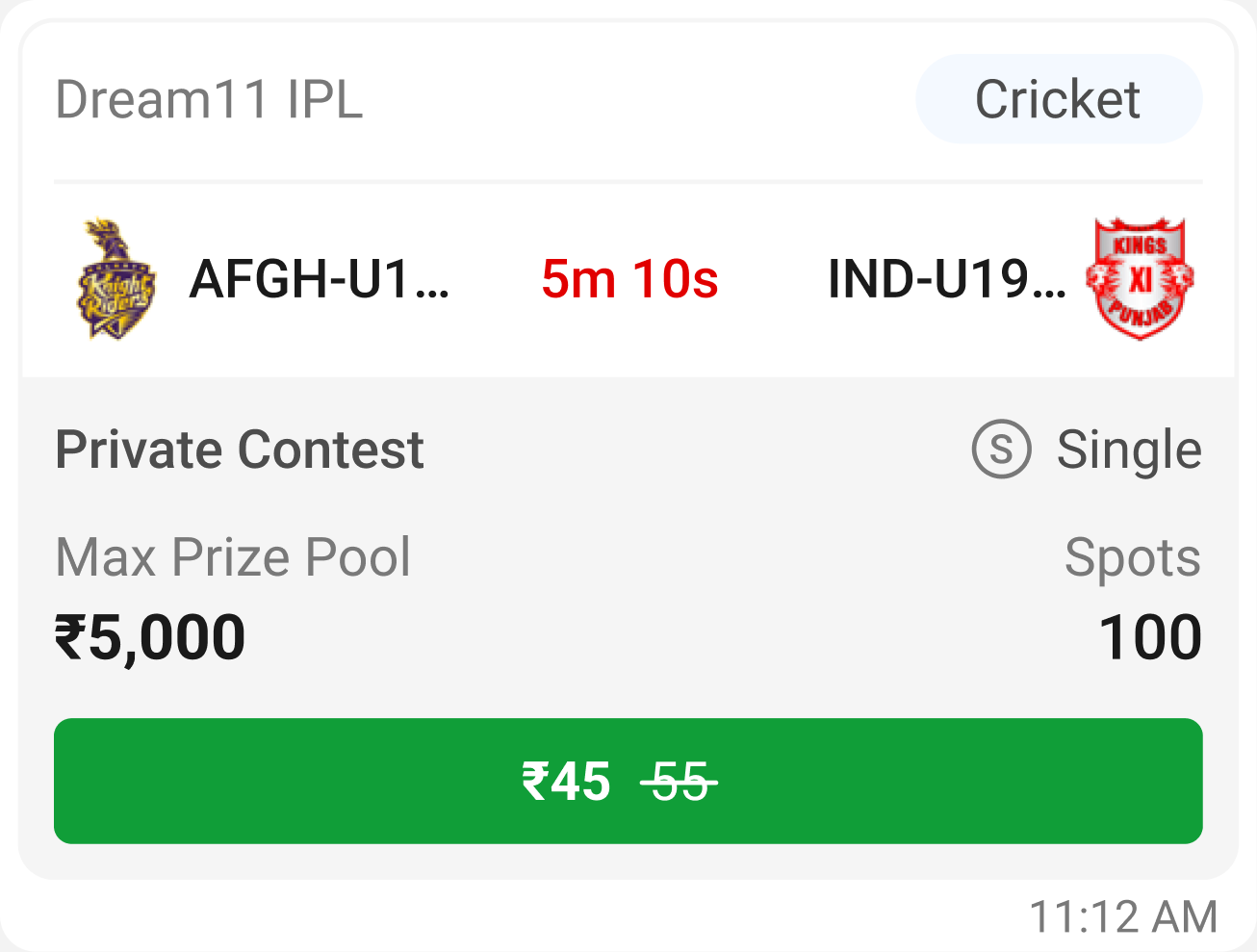
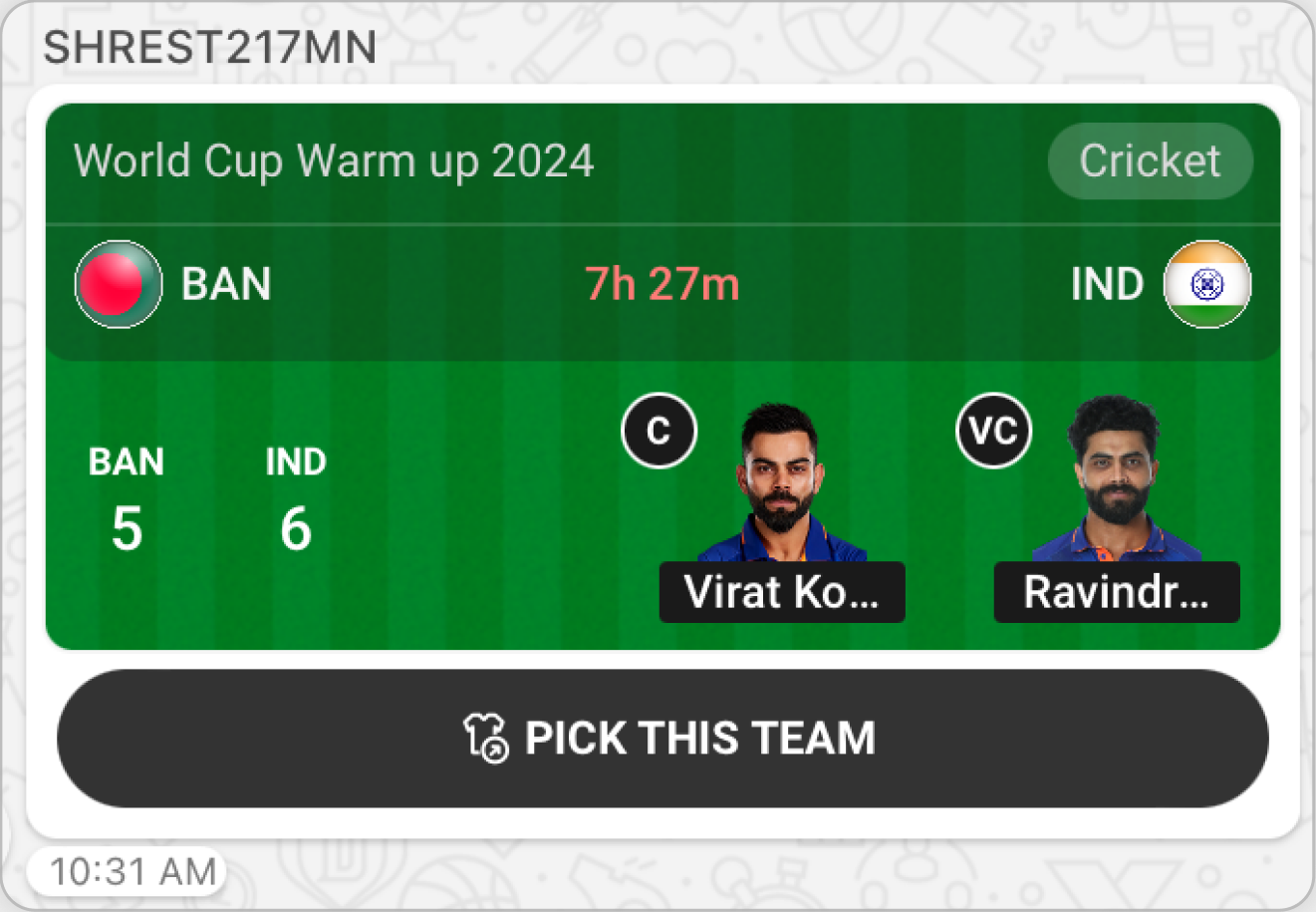
Native gameplay objects
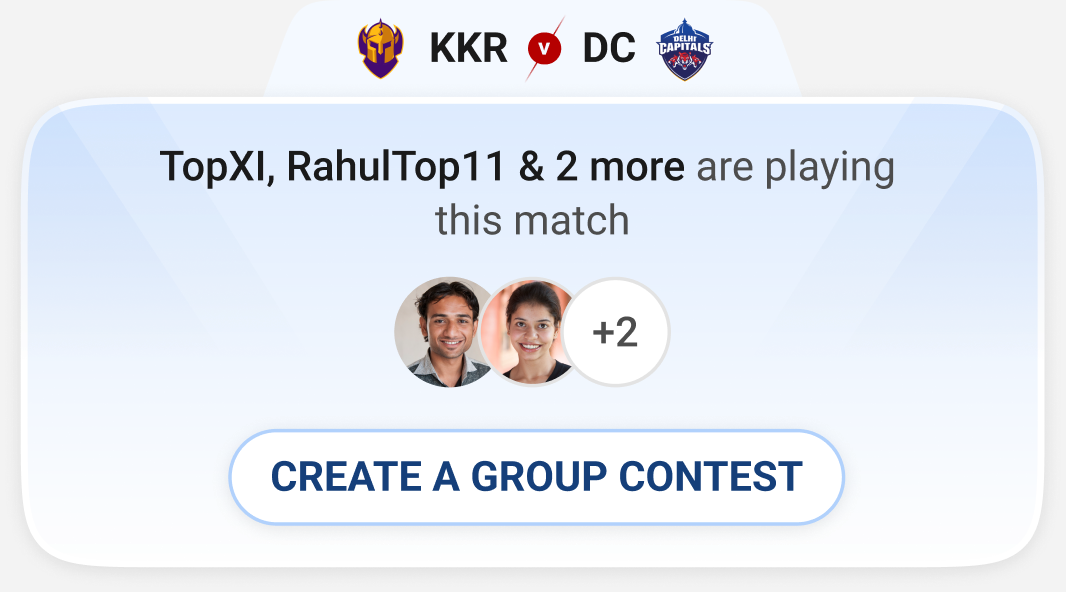
System messages and nudges
What groups did for the social gameplay ecosystem
What Social Gameplay changed
Learnings
Surface-level interactions had limited impact.
Automatic contests felt like noise, so we staggered them.
The system needed to become a more active initiator.
Impact
26% of IPL playing users were in a group.
3 to 5% platform retention lift every IPL after 2020.
Message senders were 1.8X more likely to play private contests.
System messages helped sustain retention through the lean season.
Team sharing became the foundation for the Guru Teams marketplace.
Impact
What Social Gameplay added up to
+7%W4 retention for users who joined challenges, against other contests
45%of private contest joins came through groups and DMs
11% to 63%challenge conversion, once the follow model was decoupled
58%of users joined automatic contests in the first 8 hours itself
What it opened up
Clan Wars became the next direction. Around a third of players preferred playing with friends rather than against them.
Team sharing outgrew Groups and became the Guru Teams marketplace.
The principle we carried forward: the system starts the game.
In closing
Social worked when it became part of the game
40% of the app was social by 2023
What came next
Social Gameplay was a strategy project at scale, built into an existing product.
This next one is a zero-to-one build. A gaming ecosystem from scratch, across strategy, product thinking and visual craft.